



















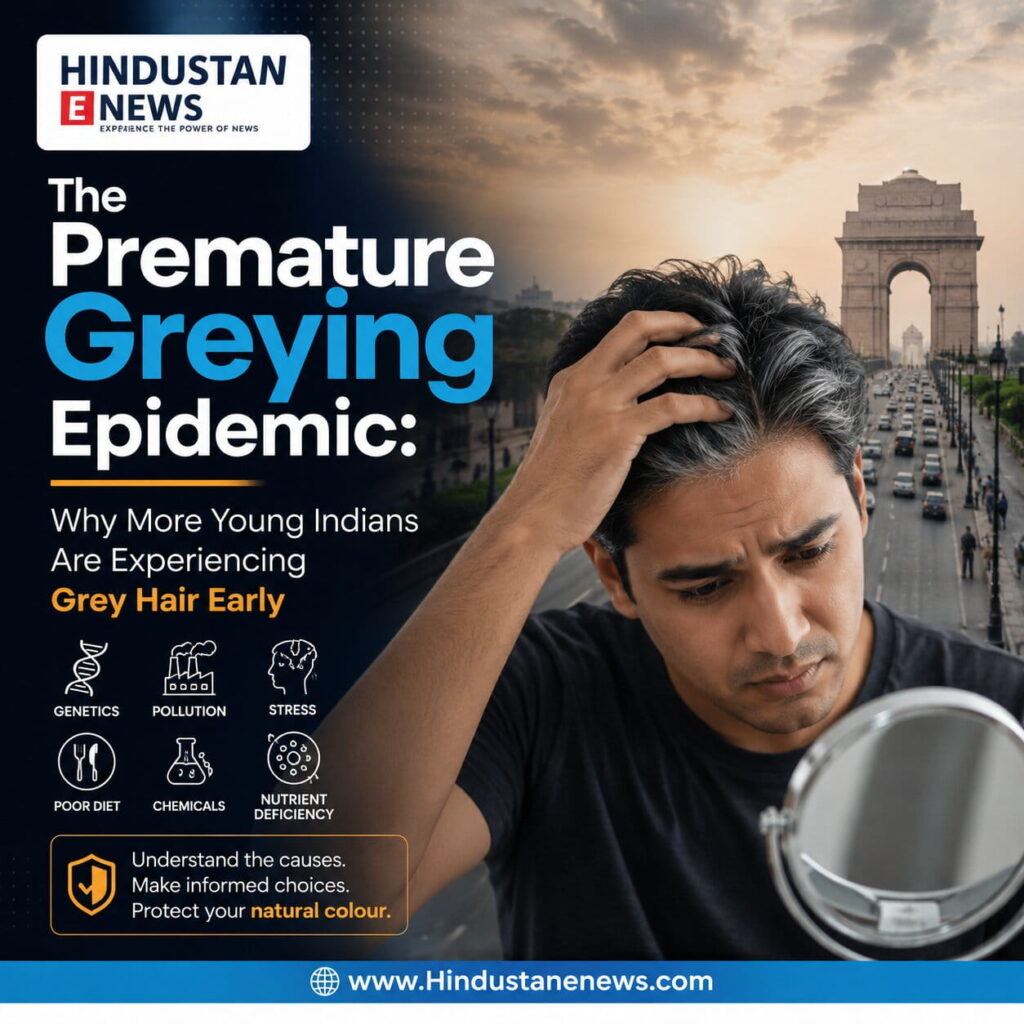






















































The Premature Greying Epidemic: Why More Young Indians Are Experiencing Grey Hair Early

The Premature Greying Epidemic: Why More Young Indians Are Affected Than Ever Before
Premature greying is rising among young Indians due to stress, pollution, poor diet, and lifestyle changes. Discover causes, prevention tips, nutrients, and science-backed remedies for healthy hair.
The Premature Greying Epidemic: Why More Young Indians Are Affected Than Ever Before

Introduction
Premature greying, once considered a natural sign of ageing, is increasingly becoming a concern among young Indians. Dermatologists and hair experts across the country are reporting a growing number of individuals in their 20s and early 30s seeking treatment for grey hair.
Traditionally, greying hair was associated with middle age, often appearing after the age of 40. However, modern lifestyle factors, environmental stressors, nutritional deficiencies, and changing dietary habits are accelerating this process. While genetics remains a major contributor, experts believe the sharp rise in premature greying cannot be explained by hereditary factors alone.
From pollution-filled urban environments to chronic stress and nutrient-poor diets, multiple factors are disrupting melanin production—the pigment responsible for hair colour. Understanding these causes can help individuals make informed choices to preserve hair health and slow down premature greying.
Quick Facts About Premature Greying in India
| Factor | Impact on Hair Pigmentation |
|---|---|
| Genetics | Increases likelihood of early greying |
| Pollution | Causes oxidative stress and melanin damage |
| Chronic Stress | Accelerates ageing of hair follicles |
| Nutritional Deficiencies | Reduces pigment production |
| Chemical Hair Products | Weakens follicles and scalp health |
| Smoking | Increases oxidative damage |
| Poor Sleep | Affects cellular repair processes |
| UV Exposure | Damages melanocyte cells |
Why Premature Greying Is Increasing Among Young Indians
India’s rapidly changing lifestyle is contributing significantly to the rise in early greying.
Young professionals and students today face:
- High academic pressure
- Long working hours
- Sleep deprivation
- Fast-food-based diets
- Increased screen exposure
- Environmental pollution
These factors collectively increase oxidative stress within the body. Oxidative stress occurs when free radicals outnumber protective antioxidants, causing cellular damage. Hair follicles are particularly vulnerable to this damage because melanocytes—the cells responsible for producing melanin—are highly sensitive to oxidative imbalance.
When melanocytes become damaged or inactive, hair begins to lose its natural pigment and turns grey or white.
The Role of Genetics in Premature Greying
Genetics remains one of the strongest predictors of early greying.
Research indicates that individuals with a family history of premature greying are significantly more likely to experience the same condition.
Signs that genetics may be involved include:
- Parents experienced grey hair before age 35
- Grandparents had early greying
- Siblings are also experiencing premature greying
Although genetics cannot be changed, lifestyle modifications can help delay progression and improve overall hair health.
How Pollution Is Damaging Hair Pigmentation
Urban Pollution and Hair Health
Major Indian cities such as Mumbai, Delhi, Bengaluru, Kolkata, and Chennai expose residents to high levels of pollutants daily.
These pollutants include:
- Vehicle emissions
- Industrial smoke
- Heavy metals
- Dust particles
- Environmental toxins
Scientific studies suggest that pollution creates oxidative stress that damages hair follicles and melanocytes.
As pollutants accumulate on the scalp, they can:
- Weaken follicles
- Trigger inflammation
- Reduce melanin production
- Accelerate hair ageing
Oxidative Stress and Melanocyte Damage
Oxidative stress is considered one of the leading biological causes of premature greying.
When free radicals attack melanocytes, pigment production declines, causing hair strands to gradually lose colour.
Protecting the scalp through proper cleansing, antioxidant-rich nutrition, and reduced pollutant exposure can help minimize damage.
How Chronic Stress Accelerates Grey Hair
Stress has become a defining feature of modern life.
Whether caused by:
- Work pressure
- Financial concerns
- Competitive exams
- Relationship challenges
- Lack of sleep
Chronic stress affects nearly every system in the body, including hair follicles.
Cortisol and Hair Pigmentation
During periods of prolonged stress, the body releases elevated levels of cortisol.
High cortisol levels may:
- Disrupt follicle function
- Increase inflammation
- Reduce cellular regeneration
- Accelerate ageing processes
Emerging research suggests that stress can directly affect melanocyte stem cells, contributing to loss of pigmentation.
Common Stress-Related Symptoms Affecting Hair
| Symptom | Effect |
|---|---|
| Sleep Deprivation | Reduced cellular repair |
| Anxiety | Increased oxidative stress |
| Burnout | Hormonal imbalance |
| Fatigue | Nutritional depletion |
| Chronic Cortisol Elevation | Premature ageing |
Diet and Premature Greying: The Hidden Connection
One of the most overlooked causes of grey hair is nutritional deficiency.
Many young Indians consume diets high in:
- Refined carbohydrates
- Sugary beverages
- Fast food
- Processed snacks
While these foods provide calories, they often lack essential nutrients required for healthy hair pigmentation.
Foods That May Increase Oxidative Stress
- Deep-fried foods
- Excess sugar
- Processed meats
- Packaged snacks
- Soft drinks
Over time, these foods can contribute to inflammation and oxidative damage.
Foods That Support Hair Pigmentation
Include:
- Leafy green vegetables
- Nuts and seeds
- Lentils
- Dairy products
- Eggs
- Fish
- Fruits rich in antioxidants
A balanced diet helps provide the vitamins and minerals necessary for melanin production.
Chemical-Loaded Hair Products vs Clean Alternatives
The Hidden Risk in Conventional Hair Products
Many commercial shampoos and styling products contain ingredients that may negatively affect scalp health.
Common ingredients include:
- Sulphates
- Parabens
- Artificial fragrances
- Harsh preservatives
Frequent exposure may:
- Strip natural oils
- Irritate the scalp
- Weaken follicles
- Increase dryness
Impact of Heat Styling
Excessive use of:
- Hair straighteners
- Curling irons
- Blow dryers
can weaken the hair shaft and contribute to brittleness.
Benefits of Cleaner Haircare Products
Look for products that are:
- Sulphate-free
- Paraben-free
- Silicone-free
- Rich in botanical extracts
These formulations help maintain scalp balance and reduce unnecessary stress on hair follicles.
Essential Nutrients That Help Prevent Premature Greying
Nutritional deficiencies are among the most treatable causes of premature greying.
1. Copper
Copper plays a vital role in melanin synthesis.
Sources:
- Cashews
- Sesame seeds
- Mushrooms
- Dark chocolate
2. Vitamin B12
Low B12 levels are frequently associated with premature greying.
Sources:
- Milk
- Eggs
- Fish
- Fortified cereals
3. Iron
Iron supports oxygen delivery to hair follicles.
Sources:
- Spinach
- Lentils
- Red meat
- Beans
4. Zinc
Zinc contributes to healthy follicle function.
Sources:
- Pumpkin seeds
- Chickpeas
- Nuts
- Whole grains
5. Folic Acid
Important for cell growth and repair.
Sources:
- Leafy greens
- Citrus fruits
- Legumes
Nutrient Guide for Healthy Hair
| Nutrient | Function |
|---|---|
| Copper | Melanin production |
| Vitamin B12 | Follicle health |
| Iron | Oxygen transport |
| Zinc | Hair growth support |
| Folic Acid | Cell regeneration |
| Vitamin C | Antioxidant protection |
| Vitamin E | Reduces oxidative stress |
Science-Backed Natural Remedies for Grey Hair
Amla (Indian Gooseberry)
Amla is one of the most widely used ingredients in traditional Indian haircare.
Benefits include:
- Rich source of Vitamin C
- Antioxidant protection
- Improved scalp circulation
- Support for melanin production
Bhringraj
Traditionally used in Ayurveda for hair nourishment.
Potential benefits:
- Supports scalp health
- Strengthens roots
- Improves hair texture
Hibiscus
Contains natural antioxidants that may protect follicles from damage.
Argan Oil
Argan oil provides:
- Vitamin E
- Essential fatty acids
- Antioxidants
These nutrients help combat oxidative stress and improve hair condition.
Goji Berries
Known for their antioxidant content, goji berries may support collagen production and overall follicle health.
Lifestyle Changes That Can Slow Premature Greying
Experts recommend the following habits:
Prioritize Sleep
Aim for 7–8 hours of quality sleep each night.
Manage Stress
Helpful techniques include:
- Meditation
- Yoga
- Deep breathing
- Physical activity
Stay Hydrated
Adequate hydration supports scalp and follicle health.
Avoid Smoking
Smoking significantly increases oxidative stress throughout the body.
Protect Hair From UV Exposure
Wear protective coverings when spending extended periods outdoors.
Can Grey Hair Be Reversed?
The answer depends on the cause.
If greying results from:
- Nutritional deficiencies
- Stress
- Certain medical conditions
there may be some improvement after correcting the underlying issue.
However, genetically driven greying is generally more difficult to reverse completely.
The primary goal should be slowing progression and maintaining healthy hair.
Expert Recommendations for Young Indians
Dermatologists commonly recommend:
- Balanced nutrition
- Regular blood tests for deficiencies
- Stress management
- Gentle haircare practices
- Antioxidant-rich foods
- Reduced chemical exposure
- Professional consultation when necessary
Conclusion
Premature greying is becoming increasingly common among young Indians due to a combination of genetic predisposition, environmental pollution, chronic stress, nutritional deficiencies, and aggressive haircare practices.
While genetics cannot be changed, many contributing factors are within our control. A nutrient-rich diet, healthy lifestyle habits, stress management, and cleaner haircare choices can help preserve natural hair pigmentation and improve overall hair health.
The growing prevalence of premature greying serves as a reminder that hair health is closely connected to overall well-being. By addressing the root causes early, individuals can take meaningful steps toward maintaining stronger, healthier, and more resilient hair for years to come.
Frequently Asked Questions (FAQs)
Why is grey hair increasing among young Indians?
Increasing stress levels, pollution, poor dietary habits, nutritional deficiencies, and lifestyle changes are major contributing factors.
Can vitamin deficiency cause premature greying?
Yes. Deficiencies in Vitamin B12, copper, iron, zinc, and folic acid have been linked to premature greying.
Does stress really cause grey hair?
Research suggests chronic stress may affect melanocyte stem cells and accelerate loss of pigmentation.
Which foods help prevent grey hair?
Leafy greens, nuts, seeds, dairy products, legumes, eggs, fish, and antioxidant-rich fruits can support healthy hair pigmentation.
Are natural remedies effective?
Ingredients such as amla, bhringraj, hibiscus, argan oil, and antioxidant-rich foods may help support scalp health and delay visible greying.
Can grey hair be reversed naturally?
In some cases linked to nutritional deficiencies or stress, improvement may occur after addressing the root cause. Results vary between individuals.
When should I consult a doctor?
If greying occurs suddenly, progresses rapidly, or is accompanied by hair loss or other health concerns, consult a dermatologist or healthcare professional.
Author
Hindustan Enews Editorial Team
Recommended Authoritative External References
- https://www.nih.gov
- https://www.ncbi.nlm.nih.gov
- https://www.who.int
- https://www.aad.org
- https://ods.od.nih.gov

Published by: www.HindustanEnews.com