




















































Avoid Foreign Travel, Gold Purchases & Imports: PM Modi’s Big Economic Appeal Amid Global Crisis

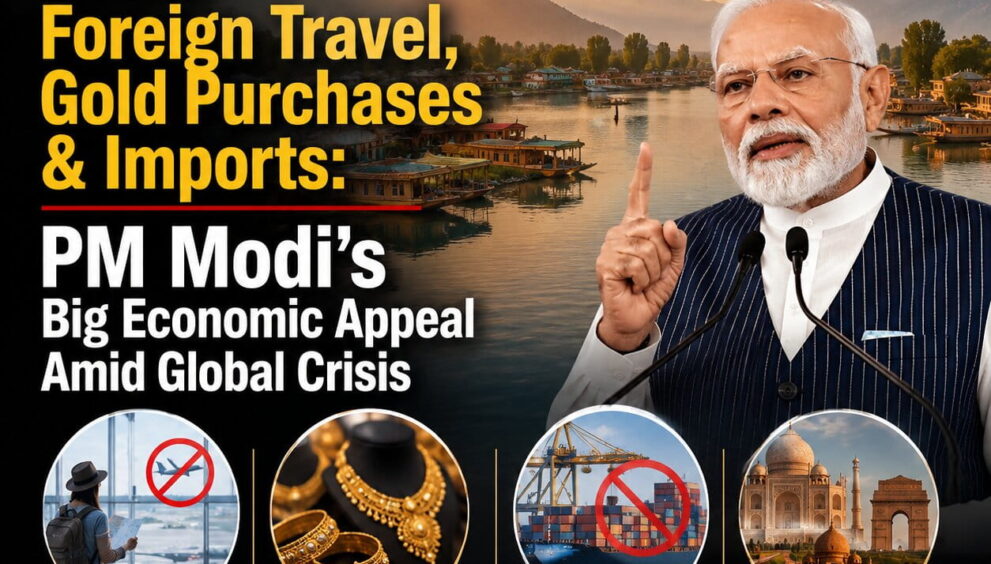
Avoid Unnecessary Foreign Travel, Gold Purchases and Excess Imports: PM Modi Calls for Economic Discipline Amid Global Turmoil
PM Modi urges Indians to avoid foreign travel, reduce gold purchases, edible oil use and chemical fertilizers to protect India’s economy from global turmoil. Read complete analysis, economic impact, FAQs and expert insights.
By Hindustan Enews
Published on May 13, 2026
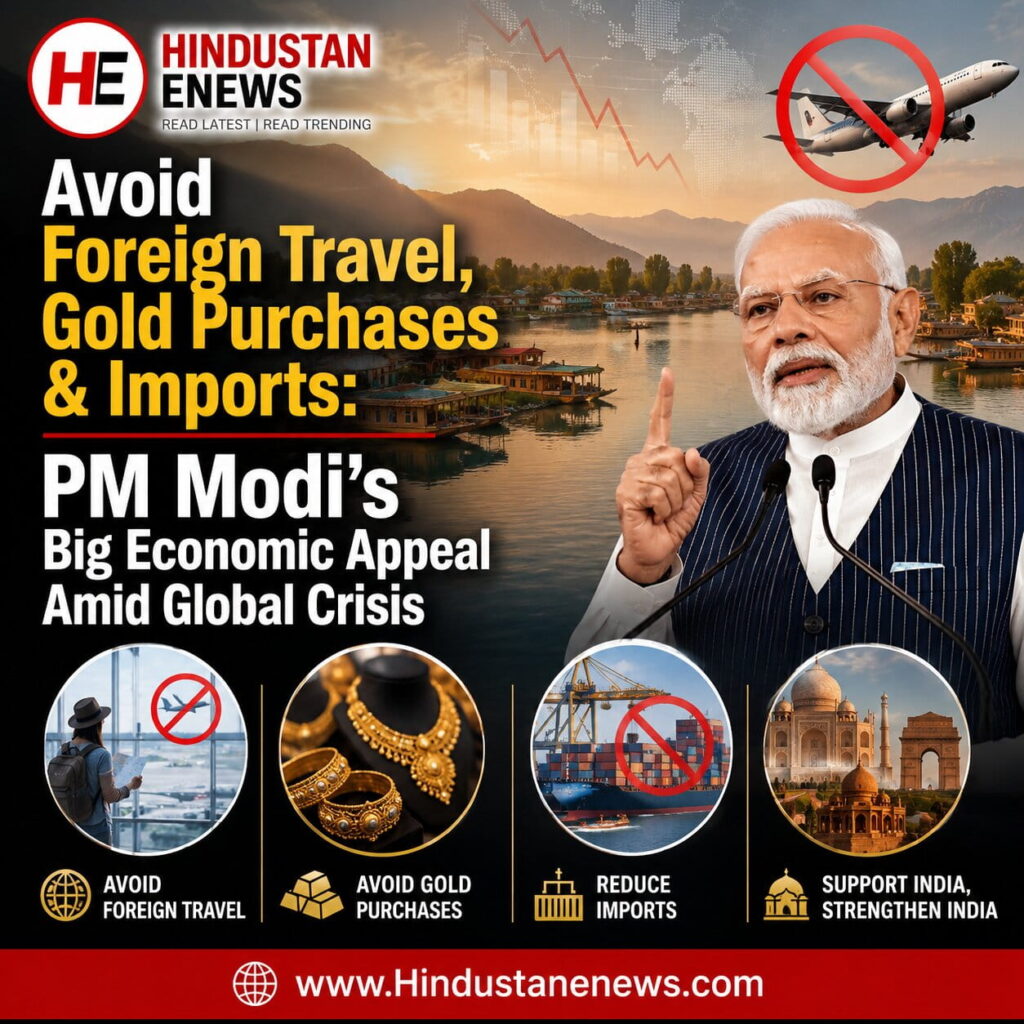
India is entering a crucial phase of economic resilience and strategic self-reliance as Prime Minister Narendra Modi urged citizens to adopt financially responsible habits amid growing global uncertainty. In a significant address focused on shielding India from worldwide economic instability, PM Modi appealed to Indians to reduce unnecessary foreign travel, avoid extravagant overseas weddings, limit non-essential gold purchases, and adopt sustainable agricultural practices by reducing chemical fertilizer and edible oil consumption.
The Prime Minister emphasized that every citizen has a role to play in strengthening India’s economic foundations and protecting foreign exchange reserves during turbulent global conditions.
According to experts, these measures are intended to reduce import dependency, conserve foreign exchange reserves, stabilize the Indian Rupee, promote domestic tourism, and encourage sustainable growth.
India’s economic strategy now revolves around “Self-Reliance with Stability,” aligning with the broader vision of Atmanirbhar Bharat.
Official Government Portal: Government of India
Official PMO Website: Prime Minister of India Official Website
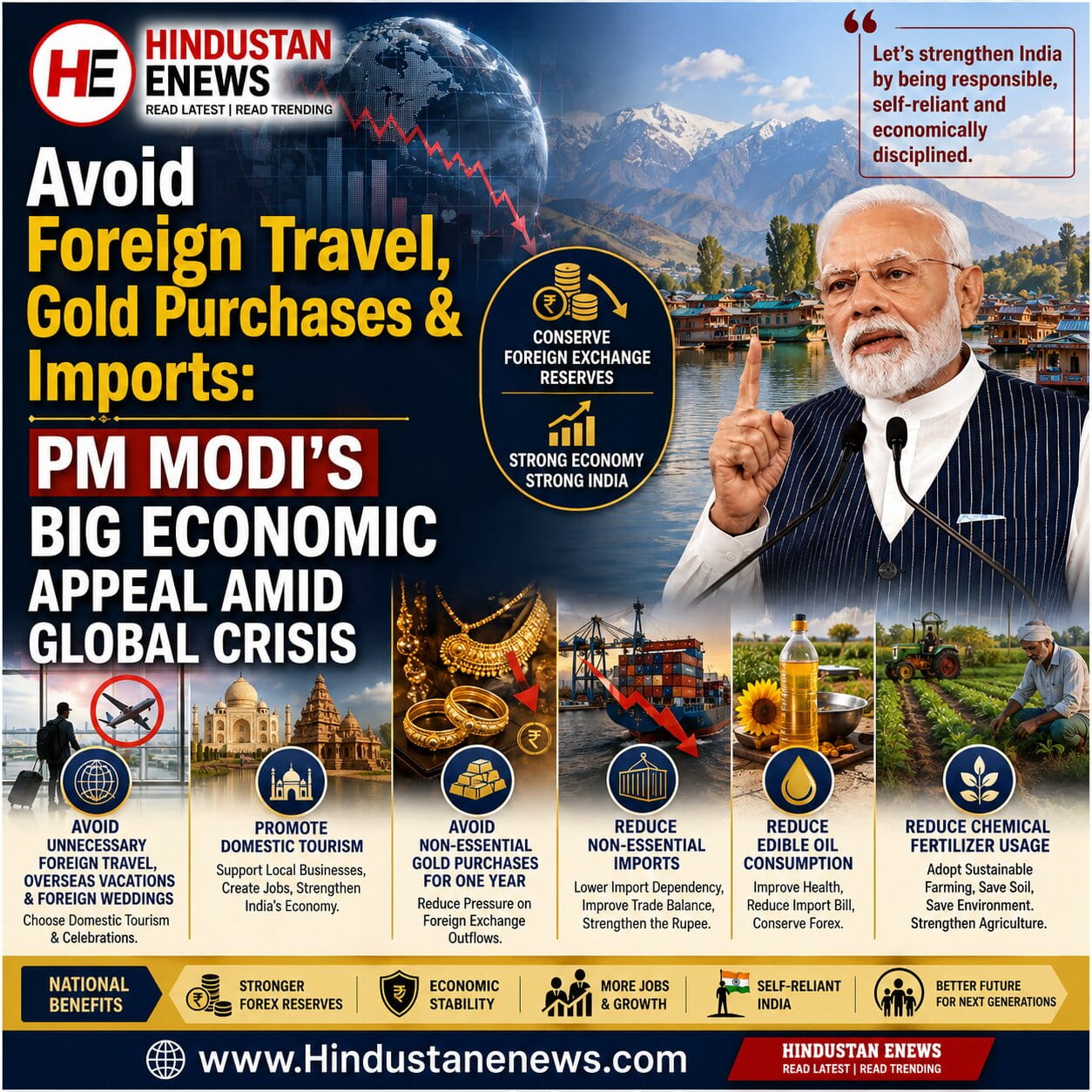
PM Modi Urges Indians to Avoid Foreign Travel, Overseas Weddings and Non-Essential Gold Purchases Amid Global Economic Uncertainty
Prime Minister Narendra Modi made a strong appeal to citizens to adopt economically responsible habits in order to protect India from growing global financial instability and external economic pressures. Addressing concerns arising from international geopolitical tensions, rising import costs, inflationary risks, and uncertainty in global markets, PM Modi urged Indians to actively participate in strengthening the nation’s economic resilience.
The Prime Minister specifically requested citizens to help conserve India’s valuable foreign exchange reserves by avoiding unnecessary foreign travel, overseas vacations, and extravagant destination weddings abroad. Instead, he encouraged people to choose domestic tourism, Indian destinations, and celebrations within the country to support local businesses, create employment opportunities, and keep money circulating within the Indian economy.
According to economic experts, India witnesses billions of dollars in annual foreign exchange outflows through international tourism, luxury shopping abroad, destination weddings, overseas education, and imported luxury consumption. During periods of global uncertainty, reducing avoidable overseas expenditure can help stabilize the country’s current account balance and strengthen the Indian Rupee.
PM Modi emphasized that every citizen has a role to play in building a financially secure and self-reliant India. He stated that supporting domestic industries and reducing non-essential imports can significantly contribute toward long-term national economic stability.
PM Modi Calls for Revival of Covid-Era Work Culture
In another important observation, PM Modi reportedly encouraged businesses and institutions to reconsider flexible work arrangements and work-from-home practices wherever feasible, particularly in sectors where operationally possible.
This suggestion comes as rising global tensions and economic disruptions continue to affect international trade, energy markets, and supply chains. During the Covid-19 pandemic, India witnessed a large-scale shift toward remote work culture, digital operations, and technology-driven business continuity models.
Experts believe hybrid work systems can help:
| Benefit | Impact |
|---|---|
| Reduce Fuel Consumption | Lower import dependency |
| Decrease Urban Congestion | Better productivity |
| Save Operational Costs | Business efficiency |
| Reduce Pollution | Environmental sustainability |
| Improve Work-Life Balance | Employee welfare |
The revival of flexible work culture may also reduce transportation expenses and energy consumption, indirectly supporting economic efficiency during volatile global conditions.
Why PM Modi Asked Indians to Avoid Unnecessary Foreign Travel
PM Modi specifically highlighted the importance of preserving India’s foreign exchange reserves by reducing avoidable foreign expenditures. He urged citizens to prioritize domestic tourism instead of overseas vacations and destination weddings.
According to economists, India spends billions annually on:
| Category | Estimated Outflow |
|---|---|
| Overseas Tourism | Massive forex outflow |
| Foreign Education | Increasing yearly |
| Destination Weddings | Luxury spending abroad |
| Gold Imports | Major burden on trade deficit |
| Edible Oil Imports | Heavy import dependency |
By encouraging Indians to travel within India, the government aims to strengthen local economies, create jobs, and reduce pressure on foreign reserves.
Benefits of Promoting Domestic Tourism
| Benefit | Impact |
|---|---|
| Increased Local Employment | Boosts hospitality sector |
| Economic Growth | Strengthens small businesses |
| Forex Conservation | Reduces dollar outflow |
| Infrastructure Development | Encourages state tourism growth |
| Cultural Promotion | Supports Indian heritage |
Top tourism resources:
Incredible India Tourism Portal
Ministry of Tourism India
PM Modi’s Warning on Global Economic Turmoil
The Prime Minister’s remarks come at a time when the global economy is facing multiple challenges including:
- Rising geopolitical tensions
- Inflation across major economies
- Crude oil price volatility
- Supply chain disruptions
- Currency instability
- Global recession fears
- Increasing import costs
Economic analysts believe India must remain cautious as international uncertainties can impact:
- Rupee valuation
- Fuel prices
- Inflation
- Foreign investment
- Commodity markets
- Employment generation
International economic data and trends:
World Bank Official Website
International Monetary Fund (IMF)
Reduce Non-Essential Gold Purchases: Why It Matters
India is one of the world’s largest importers of gold. PM Modi emphasized that excessive gold imports increase pressure on India’s trade deficit and foreign reserves.
How Gold Imports Affect the Economy
| Factor | Economic Impact |
|---|---|
| Increased Gold Imports | Higher dollar outflow |
| Trade Deficit Expansion | Weakens economy |
| Pressure on Rupee | Currency depreciation risk |
| Reduced Productive Investments | Lower capital circulation |
Economists suggest that instead of excessive physical gold purchases, citizens may consider:
- Sovereign Gold Bonds
- Gold ETFs
- Digital Gold Investments
- Productive financial assets
Financial education resources:
Reserve Bank of India
SEBI Official Website
Reduce Edible Oil Consumption and Imports
India imports a significant portion of its edible oil requirements. PM Modi highlighted that reducing excessive edible oil usage can improve public health and reduce import dependency.
India’s Edible Oil Import Challenge
| Oil Type | Major Import Sources |
|---|---|
| Palm Oil | Indonesia, Malaysia |
| Soybean Oil | Argentina, Brazil |
| Sunflower Oil | Ukraine, Russia |
Benefits of Reducing Edible Oil Consumption
| Advantage | Result |
|---|---|
| Better Health | Reduced obesity risk |
| Lower Import Bills | Forex conservation |
| Improved Sustainability | Lower dependency |
| Domestic Production Support | Encourages Indian farmers |
Health and nutrition references:
World Health Organization (WHO)
National Health Portal India
PM Modi Calls for Reduced Chemical Fertilizer Usage
One of the most important aspects of PM Modi’s address was his appeal to reduce excessive chemical fertilizer use and adopt sustainable agricultural practices.
India spends heavily on fertilizer subsidies and imports. Overuse of chemical fertilizers also damages soil fertility and groundwater quality.
Sustainable Agriculture and Organic Farming
| Sustainable Practice | Benefits |
|---|---|
| Organic Farming | Better soil health |
| Natural Fertilizers | Reduced chemical dependency |
| Drip Irrigation | Water conservation |
| Crop Rotation | Improved productivity |
| Bio Fertilizers | Sustainable farming |
Why Reducing Fertilizer Imports Matters
| Economic Benefit | Environmental Benefit |
|---|---|
| Lower subsidy burden | Healthier soil |
| Reduced import dependency | Cleaner water |
| Better forex reserves | Sustainable ecosystems |
Agriculture resources:
Ministry of Agriculture & Farmers Welfare
Indian Council of Agricultural Research (ICAR)
India’s Focus on Atmanirbhar Bharat
PM Modi’s appeal aligns closely with the vision of Atmanirbhar Bharat, which focuses on:
- Domestic manufacturing
- Import reduction
- Economic self-reliance
- Rural development
- Sustainable growth
- Innovation-led progress
Core Pillars of Atmanirbhar Bharat
| Pillar | Objective |
|---|---|
| Economy | Quantum growth |
| Infrastructure | Modern India |
| Technology | Digital advancement |
| Demography | Youth empowerment |
| Demand | Strong domestic market |
Official initiative details:
Atmanirbhar Bharat Initiative
How Domestic Tourism Can Transform India’s Economy
The Prime Minister strongly encouraged Indians to choose Indian destinations over foreign vacations.
Best Domestic Tourism Sectors Benefiting from Local Travel
| Sector | Economic Contribution |
|---|---|
| Hotels & Hospitality | Employment generation |
| Transportation | Revenue growth |
| Handicrafts | Support local artisans |
| Food Industry | Increased tourism spending |
| Rural Tourism | Village development |
Popular Indian Destinations Witnessing Growth
| Region | Tourism Attraction |
|---|---|
| Rajasthan | Heritage tourism |
| Kerala | Wellness tourism |
| Uttarakhand | Spiritual tourism |
| Goa | Beach tourism |
| Kashmir | Nature tourism |
Tourism development resources:
Invest India Tourism Sector
Experts Support PM Modi’s Economic Discipline Message
Several economists and policy analysts believe PM Modi’s message is timely considering the uncertain global environment.
Experts suggest that responsible spending habits can help India:
- Maintain stable forex reserves
- Control inflation
- Improve current account balance
- Strengthen domestic industries
- Reduce external vulnerability
Key Economic Indicators India Is Protecting
| Indicator | Importance |
|---|---|
| Forex Reserves | Currency stability |
| Current Account Balance | Economic health |
| Inflation Rate | Consumer affordability |
| Fiscal Deficit | Government spending control |
| Import Dependency | Strategic security |
Economic research portals:
NITI Aayog Official Website
Ministry of Finance India
Public Response to PM Modi’s Appeal
Many citizens, business leaders, economists, and social commentators have responded positively to the Prime Minister’s message.
Supporters believe that:
- Domestic spending strengthens India
- Responsible consumption helps economic stability
- Sustainable practices benefit future generations
- Reduced import dependence improves national resilience
However, some experts argue that long-term structural reforms, industrial expansion, and higher exports are equally important alongside public participation.
India’s Economic Position Compared Globally
Despite global turbulence, India continues to remain one of the fastest-growing major economies in the world.
India’s Strength Areas
| Sector | Global Position |
|---|---|
| Digital Payments | Global leader |
| Startup Ecosystem | Rapidly expanding |
| Pharmaceutical Industry | Major exporter |
| IT Services | Global dominance |
| Renewable Energy | Fast-growing sector |
Challenges India Still Faces
| Challenge | Concern |
|---|---|
| Oil Imports | High dependency |
| Gold Imports | Forex pressure |
| Fertilizer Subsidies | Fiscal burden |
| Inflation Risks | Consumer impact |
| Global Recession | Export slowdown |
Global economic reports:
OECD Official Website
United Nations Economic Reports
Key Takeaways From PM Modi’s Appeal
What Citizens Can Do
| Action | National Benefit |
|---|---|
| Choose Domestic Tourism | Save forex |
| Avoid Unnecessary Gold Purchases | Reduce imports |
| Use Less Edible Oil | Better health & lower imports |
| Reduce Chemical Fertilizer Usage | Sustainable agriculture |
| Support Local Products | Economic growth |
Long-Term National Goals
- Stronger economy
- Reduced external dependency
- Stable currency
- Sustainable agriculture
- Better fiscal discipline
- Increased domestic production
FAQs & People Also Ask (PAA) for Avoid Foreign Travel, Gold Purchases & Imports: PM Modi’s Big Economic Appeal Amid Global Crisis
1. Why did PM Modi ask Indians to avoid unnecessary foreign travel?
Prime Minister Narendra Modi urged citizens to reduce unnecessary foreign travel to help conserve India’s foreign exchange reserves during global economic uncertainty. Overseas vacations, destination weddings, and luxury spending abroad increase dollar outflow from India. By promoting domestic tourism and spending within the country, India can strengthen local businesses, improve employment, and support economic stability.
2. How does foreign travel impact India’s forex reserves?
When Indians spend money abroad on hotels, shopping, education, tourism, and weddings, foreign currency leaves the country. Large-scale overseas spending increases pressure on India’s forex reserves and current account balance. Reducing unnecessary foreign travel helps conserve foreign exchange and supports the Indian Rupee during global market volatility.
3. Why is PM Modi advising people to reduce gold purchases?
India imports massive quantities of gold every year, which creates a heavy burden on foreign exchange reserves. PM Modi’s appeal focuses on reducing non-essential gold imports to strengthen India’s economy, improve the trade balance, and lower import dependency during global economic challenges.
4. How do gold imports affect the Indian economy?
Gold imports increase India’s trade deficit because India spends billions of dollars purchasing gold from international markets. Excessive imports can weaken the Rupee, increase inflationary pressure, and impact long-term economic stability. Economists recommend balanced investment strategies rather than excessive physical gold buying.
5. Why did PM Modi mention reducing edible oil consumption?
India imports a large amount of edible oils such as palm oil, sunflower oil, and soybean oil. PM Modi encouraged citizens to reduce excessive edible oil consumption because it can improve public health and reduce India’s import dependency, helping conserve foreign exchange reserves.
6. How can reducing edible oil usage benefit health and the economy?
Lower edible oil consumption can reduce obesity, heart disease risk, and lifestyle disorders. Economically, it decreases India’s import bill and strengthens self-reliance by encouraging domestic oilseed production.
7. What did PM Modi say about chemical fertilizers?
PM Modi encouraged farmers to reduce excessive chemical fertilizer usage and adopt sustainable agricultural methods. The goal is to improve soil health, reduce fertilizer import dependency, lower government subsidy burdens, and support environmentally sustainable farming.
8. Why is India trying to reduce fertilizer dependency?
India spends heavily on fertilizer subsidies and imports. Reducing dependency on imported fertilizers helps lower government expenditure, improve fiscal discipline, and encourage organic and natural farming practices that protect soil quality and groundwater.
9. What is the connection between PM Modi’s appeal and Atmanirbhar Bharat?
PM Modi’s message aligns directly with the Atmanirbhar Bharat initiative, which focuses on self-reliance, domestic manufacturing, reduced imports, local production, sustainable growth, and economic resilience against global uncertainties.
10. How does domestic tourism support India’s economy?
Domestic tourism generates employment in hotels, transportation, restaurants, handicrafts, and local businesses. It also promotes regional development and keeps money circulating within India instead of flowing to foreign economies.
11. Why is conserving foreign exchange reserves important for India?
Foreign exchange reserves help India manage imports, stabilize the Rupee, maintain investor confidence, and protect the economy during global crises. Strong forex reserves are critical during inflation, oil price hikes, geopolitical tensions, and recession risks.
12. What global economic challenges is India currently facing?
India is navigating multiple global challenges including inflation, rising crude oil prices, geopolitical conflicts, supply chain disruptions, currency volatility, and slowdown risks in major economies. These factors can impact imports, exports, investment, and domestic prices.
13. How can Indian citizens support economic stability?
Citizens can contribute by supporting local products, choosing domestic travel, avoiding unnecessary luxury imports, reducing wastage, practicing sustainable consumption, and encouraging Indian manufacturing and agriculture.
14. Is PM Modi’s appeal linked to rising global uncertainty?
Yes. PM Modi’s appeal comes at a time when the world economy is facing instability due to wars, inflation, trade disruptions, energy price fluctuations, and slowing economic growth in several countries. India is focusing on financial discipline to remain resilient.
15. What are the long-term benefits of reducing unnecessary imports?
Reducing unnecessary imports helps strengthen the Rupee, improve the trade balance, increase domestic manufacturing, reduce fiscal pressure, conserve forex reserves, and create long-term economic stability for India.
16. Why is PM Modi encouraging Indians to choose domestic tourism over foreign vacations?
Prime Minister Narendra Modi is encouraging Indians to prioritize domestic tourism because it directly supports India’s economy and reduces foreign currency outflow. Every year, billions of dollars are spent by Indian travelers on international holidays, destination weddings, luxury shopping, and foreign hospitality services. This spending increases pressure on India’s foreign exchange reserves, especially during times of global economic instability.
Domestic tourism helps create employment opportunities across sectors such as hotels, transportation, food services, handicrafts, pilgrimage tourism, aviation, and local retail markets. When citizens travel within India, money circulates inside the national economy and strengthens regional development.
The government also wants to promote Indian heritage, culture, spirituality, eco-tourism, and local entrepreneurship through increased domestic travel. States like Rajasthan, Kerala, Uttarakhand, Goa, Himachal Pradesh, and Jammu & Kashmir can significantly benefit from higher tourist activity.
In the long run, stronger domestic tourism contributes to GDP growth, infrastructure development, and economic self-reliance under the vision of Atmanirbhar Bharat.
17. How can reducing gold imports help India’s economy during global turmoil?
Gold imports have historically placed a heavy burden on India’s trade deficit because the country imports a substantial amount of gold from international markets every year. During periods of global economic instability, rising inflation, and currency volatility, excessive gold imports can weaken India’s foreign exchange position.
PM Modi’s appeal aims to encourage responsible financial behavior by reducing unnecessary physical gold purchases. When gold imports rise, India spends more dollars abroad, which can impact forex reserves and increase pressure on the Indian Rupee.
Reducing non-essential gold imports can improve the current account balance, strengthen economic resilience, and allow capital to flow into more productive investments such as infrastructure, manufacturing, startups, digital innovation, and financial markets.
Financial experts suggest alternatives like Sovereign Gold Bonds (SGBs), Gold ETFs, and diversified investments that offer gold exposure without increasing physical imports. This approach supports both personal wealth management and national economic stability.
18. Why is reducing edible oil dependency becoming important for India?
India is among the world’s largest importers of edible oils, including palm oil, soybean oil, and sunflower oil. A major portion of these imports comes from countries such as Indonesia, Malaysia, Argentina, Brazil, Russia, and Ukraine. Global conflicts, supply chain disruptions, and rising commodity prices have made edible oil imports increasingly expensive.
PM Modi highlighted the need to reduce excessive edible oil consumption because it impacts both public health and the economy. High edible oil dependency increases import bills and exposes India to international price fluctuations.
Reducing edible oil usage can improve heart health, reduce obesity, lower cholesterol-related diseases, and encourage healthier dietary practices. Economically, it can help India save foreign exchange and support local oilseed farmers by boosting domestic production of mustard, groundnut, soybean, and sunflower crops.
This strategy aligns with India’s broader goal of self-reliance, sustainable agriculture, and import reduction while improving long-term food security.
19. What are the environmental and economic benefits of reducing chemical fertilizer use in India?
Excessive chemical fertilizer usage has become a major concern for both environmental sustainability and India’s agricultural economy. PM Modi emphasized reducing dependency on chemical fertilizers because overuse damages soil fertility, contaminates groundwater, and increases long-term farming costs.
India also spends a significant amount on fertilizer subsidies and imports. Reducing fertilizer dependency can lower the fiscal burden on the government while promoting sustainable farming techniques such as organic farming, natural fertilizers, crop rotation, composting, and bio-fertilizers.
Environmentally, reduced chemical usage improves soil quality, protects biodiversity, conserves water resources, and supports long-term agricultural productivity. Economically, it reduces import dependency and promotes self-sufficiency in agriculture.
Sustainable farming practices can also increase export opportunities for organic Indian products in international markets, creating better income opportunities for farmers and strengthening India’s agricultural ecosystem.
20. How does PM Modi’s economic discipline message support India’s long-term growth strategy?
PM Modi’s message reflects a broader strategy focused on economic discipline, sustainability, self-reliance, and national resilience during uncertain global conditions. By asking citizens to avoid unnecessary foreign spending, reduce excessive imports, and support domestic industries, the government aims to create a stronger and more stable economy.
This strategy supports multiple long-term national objectives including:
- Conserving foreign exchange reserves
- Reducing import dependency
- Strengthening the Indian Rupee
- Encouraging local manufacturing
- Supporting domestic tourism
- Promoting sustainable agriculture
- Improving fiscal discipline
- Building economic resilience against global shocks
The vision is closely aligned with Atmanirbhar Bharat, which focuses on empowering Indian industries, promoting innovation, strengthening infrastructure, and making India more self-sufficient across critical sectors.
As the global economy faces inflation, geopolitical conflicts, and recession fears, India’s focus on responsible consumption and domestic growth can help maintain economic momentum and create sustainable long-term development opportunities.
Conclusion
Prime Minister Narendra Modi’s message reflects India’s broader economic strategy during uncertain global times. By encouraging responsible spending, sustainable consumption, and reduced dependency on imports, the government aims to strengthen the country’s long-term financial resilience.
From avoiding unnecessary foreign travel to limiting excessive gold purchases and encouraging sustainable farming, the appeal highlights how collective public participation can support national economic stability.
As global markets remain volatile, India’s emphasis on self-reliance, domestic growth, and fiscal discipline may become increasingly important in maintaining economic momentum and protecting national interests.
For latest national news, economy updates, political analysis, and breaking developments, visit:
Hindustan Enews Official Website