








































































TCS Nashik Case 2026: Supreme Court Plea on Forced Religious Conversion as Terrorist Act

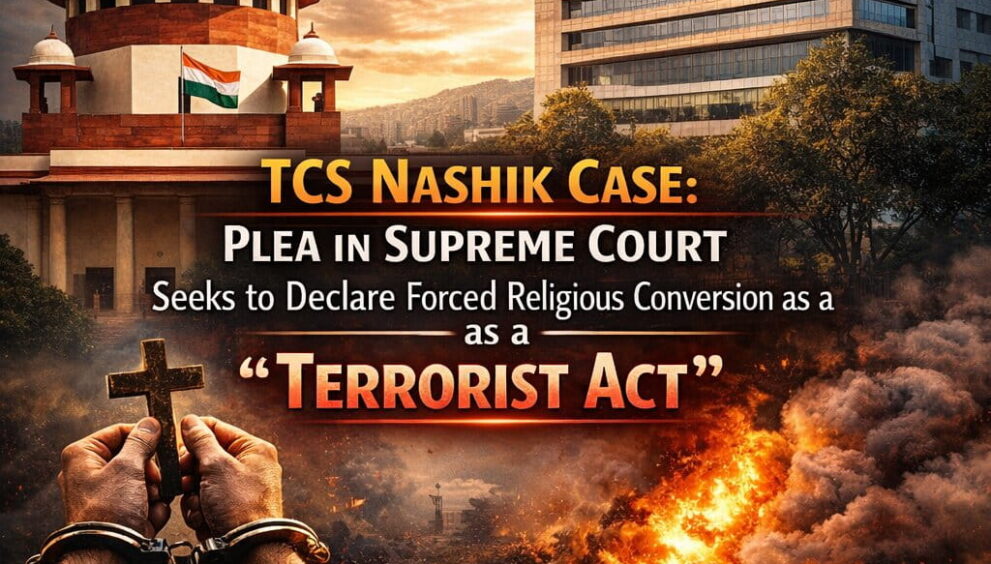
TCS Nashik Case: Plea in Supreme Court Seeks to Declare Forced Religious Conversion as a “Terrorist Act”
TCS Nashik case 2026: Supreme Court plea seeks to declare forced religious conversion a terrorist act. Read full details, legal analysis, constitutional impact, and latest updates.
Updated: April 17, 2026 | New Delhi | Hindustan Enews
A significant legal development has emerged following allegations of religious conversion and workplace misconduct at a major multinational corporation in Nashik. A petition has been filed in the Supreme Court of India seeking stringent action against forced religious conversions, including classifying such acts under the ambit of terrorism.
The plea, filed by advocate Ashwini Kumar Upadhyay, raises serious constitutional, legal, and societal concerns, arguing that deceitful religious conversions threaten the very foundation of India’s democratic and secular framework.

Table of Contents
| Section | Details |
|---|---|
| Introduction | Overview of the TCS Nashik case |
| Background | Allegations and incidents |
| Legal Petition | Key demands in Supreme Court |
| Constitutional Perspective | Rights vs restrictions |
| Impact on Society | National security and social harmony |
| Corporate Accountability | Role of MNCs |
| Legal Precedents | Existing laws and gaps |
| Expert Opinions | Legal and social viewpoints |
| FAQs | frequently asked questions |
Introduction: What is the TCS Nashik Case?
The controversy stems from allegations made by eight female employees at a Nashik office of Tata Consultancy Services (TCS). The complainants have accused certain individuals within the organization of:
- Sexual harassment
- Coercion for religious conversion
- Psychological pressure and manipulation
These allegations triggered widespread public concern and prompted legal intervention at the highest level.
Background: Key Allegations and Developments
Workplace Harassment and Conversion Claims
The case gained traction when multiple female employees reported that they were:
- Pressured to adopt a different religion
- Subjected to emotional manipulation
- Allegedly harassed when resisting conversion attempts
The seriousness of these allegations led to internal inquiries and external scrutiny.
Why Nashik Became the Focal Point
Nashik, a rapidly growing industrial and IT hub in Maharashtra, has seen increasing corporate activity. Incidents like these raise questions about:
- Workplace ethics
- Employee safety
- Corporate governance standards
Legal Petition Filed in Supreme Court
Advocate Ashwini Kumar Upadhyay’s petition demands urgent legal reforms and includes the following key requests:
Major Demands in the Plea
- Declare forced religious conversion as a “terrorist act”
- Frame strict central laws to prevent coercion
- Establish special investigation mechanisms
- Protect victims through witness protection programs
Core Argument
The petition argues that forced conversions:
- Undermine sovereignty and national integrity
- Threaten secularism and democracy
- Violate individual liberty and dignity
Constitutional Perspective: Balancing Rights
India’s Constitution guarantees:
- Freedom of religion (Article 25)
- Right to personal liberty (Article 21)
However, the plea emphasizes that:
| Right | Limitation |
|---|---|
| Freedom of Religion | Cannot include coercion or fraud |
| Personal Liberty | Must not infringe on others’ rights |
The central question before the court is whether forced conversion constitutes a criminal act severe enough to be categorized as terrorism.
Impact on Society: A Growing Concern
National Security Angle
The petition frames forced conversion as a systemic threat, arguing that:
- It can disrupt social harmony
- It may lead to communal tensions
- It impacts national unity
Social Fabric and Fraternity
India’s diversity is rooted in coexistence. Allegations of coercion challenge:
- Mutual respect among communities
- The concept of “unity in diversity”
Corporate Accountability: Role of Multinational Companies
The involvement of a major corporation like TCS raises critical questions:
Responsibilities of Employers
- Ensuring a safe work environment
- Preventing harassment of any kind
- Maintaining zero tolerance policies
Need for Internal Compliance Systems
| Area | Requirement |
|---|---|
| HR Policies | Strong anti-harassment frameworks |
| Monitoring | Anonymous complaint channels |
| Training | Sensitization programs |
Legal Framework: Existing Laws and Gaps
India currently has state-level anti-conversion laws in some regions, but:
- There is no uniform central law
- Enforcement varies across states
Relevant Legal Provisions
- Indian Penal Code (IPC) – harassment, coercion
- IT and workplace laws – employee protection
Gap Identified
The petition highlights the absence of:
- Clear national guidelines
- Strong punitive measures
Expert Opinions and Legal Analysis
Legal Experts Say
- Classifying forced conversion as terrorism may face constitutional challenges
- However, stricter laws against coercion are widely supported
Social Analysts Believe
- The issue needs balanced handling
- Over-criminalization may lead to misuse
Section: Key
- TCS Nashik case
- forced religious conversion India
- Supreme Court petition 2026
- workplace harassment India law
- religious conversion law India
External References
- Supreme Court official website: https://main.sci.gov.in
- Tata Consultancy Services: https://www.tcs.com
- Ministry of Law & Justice: https://lawmin.gov.in
- National Human Rights Commission: https://nhrc.nic.in
For more updates, visit: www.Hindustanenews.com

Summary
TCS Nashik Case 2026: A Supreme Court plea seeks to classify forced religious conversion as a terrorist act following allegations of harassment and coercion at TCS Nashik. The petition highlights threats to national unity, secularism, and individual liberty, urging strict central laws.
FAQs on TCS Nashik Case 2026: Supreme Court Plea on Forced Religious Conversion as Terrorist Act
1. What is the TCS Nashik case about?
The case involves allegations of sexual harassment and forced religious conversion made by female employees at TCS Nashik, leading to a Supreme Court petition.
2. Who filed the petition in the Supreme Court?
The plea was filed by advocate Ashwini Kumar Upadhyay seeking strict legal action against forced religious conversions.
3. What does the petition मांग?
It demands that forced religious conversion be declared a terrorist act and calls for stronger national laws.
4. Is forced religious conversion illegal in India?
Coercion and fraud are illegal, but there is no uniform central law specifically addressing forced conversions across India.
5. Why is the case significant?
It raises questions about constitutional rights, workplace safety, and national security.
6. Can forced conversion be classified as terrorism?
This is currently under legal debate and will depend on Supreme Court interpretation.
7. What are the constitutional issues involved?
The case involves balancing freedom of religion with protection from coercion and fraud.
8. How does this impact corporate companies?
It emphasizes the need for stricter workplace policies and accountability mechanisms.
9. What legal reforms are being suggested?
Uniform anti-conversion laws, stricter punishments, and better victim protection systems.
10. What is the role of TCS in this case?
TCS is the organization where the alleged incidents occurred; investigations are ongoing.
11. What is religious conversion by coercion?
It refers to forcing someone to change religion through pressure, threats, or deception.
12. Are there anti-conversion laws in India?
Yes, some states have laws, but there is no central legislation.
13. What are the penalties for forced conversion?
Penalties vary by state but can include imprisonment and fines.
14. How can victims report such incidents?
Through police complaints, HR departments, or legal petitions.
15. Is workplace conversion pressure common?
Cases are rare but taken seriously when reported.
16. What is Article 25 of the Constitution?
It guarantees freedom of religion but not coercion.
17. What actions can companies take?
Implement strict compliance, awareness training, and grievance redressal systems.
18. What is the next step in the case?
The Supreme Court may hear the petition and issue directions or notices.
19. Can such laws be misused?
Experts warn that overly strict laws may be misused if not carefully framed.
20. Why is this case trending in India?
Due to its sensitive nature involving religion, law, and corporate ethics.
Conclusion
The TCS Nashik case has sparked a nationwide debate on religious freedom, workplace ethics, and national security. As the Supreme Court examines the petition, its decision could shape the future legal landscape around religious conversions in India.
This case is not just about one company or one incident—it is about defining the boundaries between freedom and coercion in a democratic society.