











































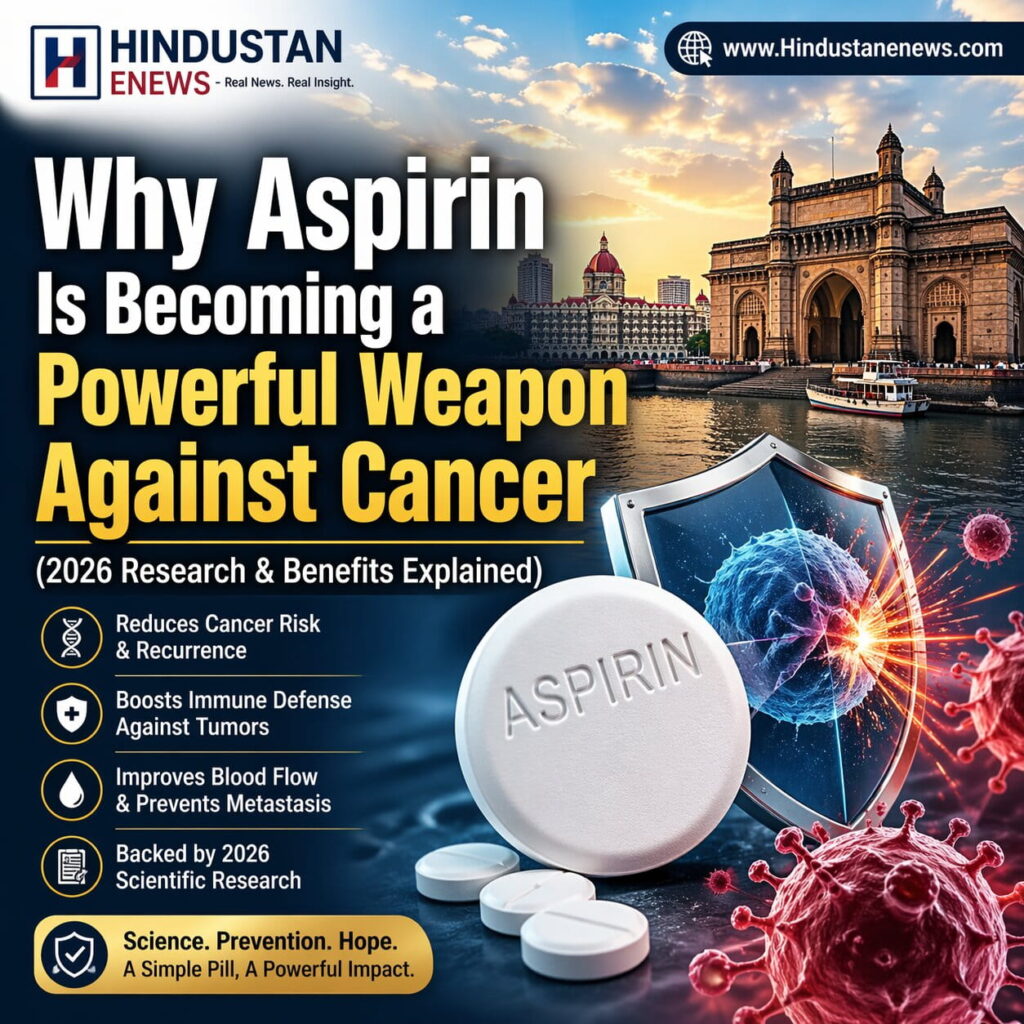































Why Aspirin Is Becoming a Powerful Weapon Against Cancer (2026 Research & Benefits Explained)

Aspirin can reduce the risk of cancer – and we’re starting to understand why
Health | Published by Hindustan Enews | www.Hindustanenews.com
Recent global studies suggest that Aspirin may reduce cancer risk, especially colorectal cancer, by up to 50% in high-risk individuals like those with Lynch Syndrome. It works by:
- Reducing inflammation (COX-2 inhibition)
- Preventing blood clot formation
- Helping immune system detect cancer cells
However, regular aspirin use should only be taken under medical supervision due to risks like bleeding and ulcers.
Read More:- IPL 2026 Full Schedule, Fixtures, Match List, Teams, Venues & Timings
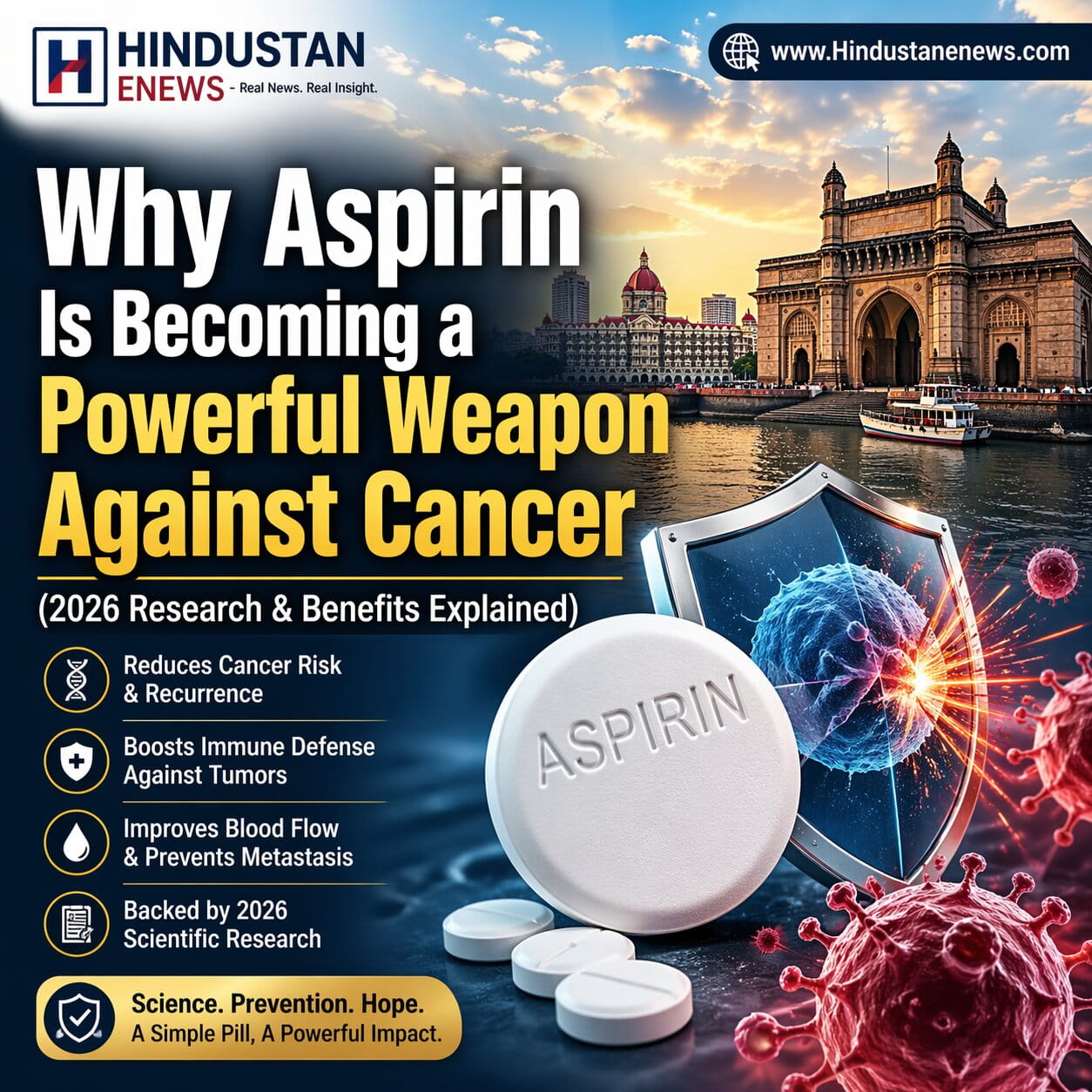
Introduction: 4000-Year-Old Drug with Modern Cancer Benefits
Aspirin, one of the oldest and most widely used medicines, is now gaining attention for something far beyond pain relief — cancer prevention.
From ancient Mesopotamian remedies derived from willow bark to modern clinical trials, aspirin has evolved into a multi-purpose drug with benefits in:
- Pain relief
- Cardiovascular protection
- Cancer prevention (emerging evidence)
Recent studies across the UK, Sweden, and global trials have reshaped how medical science views aspirin.
What Is Aspirin and How Does It Work?
| Feature | Details |
|---|---|
| Chemical Name | Acetylsalicylic Acid |
| Origin | Willow bark (Salicin compound) |
| Main Uses | Pain relief, fever, inflammation |
| Additional Benefits | Blood thinning, cancer prevention (emerging) |
Aspirin works by:
- Blocking enzymes called COX-1 and COX-2
- Reducing inflammation
- Preventing platelets from sticking (anti-clotting effect)
Scientific Evidence: Can Aspirin Prevent Cancer?
Landmark Study (Lynch Syndrome)
| Study Type | Randomized Controlled Trial |
|---|---|
| Participants | 861 patients |
| Duration | 10 years |
| Result | 50% reduction in colorectal cancer |
Key Insight:
People taking aspirin for 2+ years had significantly fewer cancers.
Sweden Study (2025)
| Parameter | Result |
|---|---|
| Patients | 2,980 |
| Dosage | 160 mg daily |
| Outcome | Less than 50% recurrence |
This study led to policy changes in Sweden (2026) where eligible patients are now prescribed aspirin.
Ongoing Global Trial
- 11,000 participants
- Countries: UK, Ireland, India
- Cancer types:
- Breast
- Prostate
- Colorectal
- Gastroesophageal
Expected results: 2026–2027
How Aspirin Prevents Cancer (Mechanism Explained)
1. Anti-Inflammatory Effect (COX-2 Inhibition)
Aspirin blocks COX-2 enzyme → reduces prostaglandins → prevents abnormal cell growth
2. Blood Thinning Effect
Reduces platelet activity → prevents cancer cells from spreading (metastasis)
3. Immune System Activation
- Blocks Thromboxane A2
- Makes cancer cells more visible to T-cells
- Enhances immune response
4. Genetic Impact
Especially effective in:
- Lynch Syndrome patients
- Tumors with specific mutations
Risks and Side Effects of Aspirin
| Side Effect | Severity |
|---|---|
| Stomach ulcers | Moderate |
| Internal bleeding | High |
| Brain hemorrhage | Rare but serious |
| Indigestion | Common |
Important:
Even low-dose aspirin (75–100 mg) can cause complications if taken without medical advice.
Who Should Consider Taking Aspirin?
Recommended (Under Doctor Supervision)
- Lynch Syndrome patients
- Colorectal cancer survivors
- High cardiovascular risk individuals
Not Recommended Without Consultation
- Healthy individuals (general population)
- People with bleeding disorders
- Pregnant women
Health Policy Changes (2020–2026)
| Country | Policy Update |
|---|---|
| UK | Aspirin recommended for Lynch Syndrome patients |
| Sweden | Mutation-based aspirin prescription started |
| Global | Clinical trials expanding |
High Authority External Resources
- https://www.nhs.uk – UK National Health Service guidelines
- https://www.cancerresearchuk.org – Cancer research updates
- https://www.who.int – World Health Organization
Aspirin vs Cancer Prevention (Quick Comparison Table)
| Factor | Without Aspirin | With Aspirin |
|---|---|---|
| Cancer Risk | High (genetic cases) | Reduced up to 50% |
| Metastasis | Higher | Lower |
| Cost | High treatment cost | Low-cost prevention |
| Side Effects | None | Possible bleeding risk |
Expert Opinions
- “Aspirin reduced cancer risk by 50% in high-risk patients.”
- “Low-dose aspirin may be as effective as high doses.”
- “Always consult a doctor before starting aspirin.”

Visit: Hindustan Enews
Official site: https://www.hindustanenews.com
FAQs on Aspirin & Cancer Prevention
1. Can Aspirin reduce cancer risk?
Yes, multiple clinical studies show that aspirin can reduce the risk of colorectal cancer, especially in high-risk individuals like those with genetic conditions such as Lynch Syndrome. Some trials report up to a 50% reduction in risk when taken regularly under medical supervision.
2. How does aspirin help prevent cancer?
Aspirin works by reducing inflammation, inhibiting COX-2 enzymes, preventing blood clot formation, and enhancing immune response to detect and destroy cancer cells.
3. Which cancers can aspirin help prevent?
Aspirin is most effective in preventing:
- Colorectal cancer
- Bowel cancer recurrence
Research is ongoing for breast, prostate, and gastrointestinal cancers.
4. What is the recommended dosage of aspirin for cancer prevention?
Low-dose aspirin (75–100 mg daily) is commonly recommended in studies, but only under doctor supervision.
5. Is aspirin safe for daily use?
Daily aspirin use can be risky due to side effects like bleeding and ulcers. It should only be taken after consulting a healthcare professional.
6. Who should take aspirin for cancer prevention?
People with:
- Lynch Syndrome
- History of colorectal cancer
- High genetic risk
may benefit from aspirin therapy under medical guidance.
7. Can healthy people take aspirin to prevent cancer?
No, it is not recommended for the general population without medical advice because the risks may outweigh the benefits.
8. How long does aspirin take to reduce cancer risk?
Studies suggest that aspirin needs to be taken for at least 2–5 years to show significant protective effects.
9. Does aspirin stop cancer from spreading?
Yes, aspirin may reduce metastasis by preventing platelets from helping cancer cells travel through the bloodstream.
10. What are the side effects of aspirin?
Common and serious side effects include:
- Stomach irritation
- Internal bleeding
- Ulcers
- Rare brain hemorrhage
11. Why is aspirin linked to lower cancer risk?
Aspirin reduces inflammation and blocks pathways that allow cancer cells to grow and spread. It also improves immune system detection of abnormal cells, making it harder for tumors to develop.
12. Is aspirin better than other cancer prevention drugs?
Aspirin is widely available and cost-effective, but it is not a replacement for cancer treatments. It is mainly used as a preventive strategy in specific high-risk groups.
13. What is Lynch Syndrome and why is aspirin recommended?
Lynch Syndrome is a genetic disorder that increases the risk of colorectal cancer. Studies show aspirin significantly reduces cancer risk in these patients.
14. Can aspirin boost the immune system against cancer?
Yes, aspirin may enhance immune response by blocking thromboxane, which helps cancer cells hide from immune cells.
15. Is low-dose aspirin effective for cancer prevention?
Yes, recent studies suggest that low-dose aspirin (75–100 mg) may be just as effective as higher doses with fewer side effects.
16. Should you take aspirin daily to prevent cancer?
Taking aspirin daily for cancer prevention is not suitable for everyone. While research shows significant benefits for high-risk groups such as individuals with genetic predispositions or previous cancer history, it can also cause serious side effects like internal bleeding. Doctors evaluate factors such as age, medical history, and risk level before recommending aspirin. Therefore, self-medication should be strictly avoided.
17. What is the scientific mechanism behind aspirin and cancer prevention?
Aspirin works through multiple biological mechanisms. It inhibits COX-2 enzymes, reducing inflammation that can lead to tumor growth. It also decreases platelet activity, preventing cancer cells from spreading through the bloodstream. Additionally, it blocks thromboxane, improving immune system recognition of cancer cells. This multi-layered action makes aspirin unique in cancer prevention research.
18. Can aspirin reduce cancer recurrence after treatment?
Yes, studies have shown that aspirin can significantly reduce the risk of cancer recurrence, particularly in colorectal cancer patients. Patients who took aspirin after surgery had nearly 50% lower recurrence rates compared to those who did not. This has already influenced treatment guidelines in some countries.
19. What are the risks of long-term aspirin use for cancer prevention?
Long-term aspirin use can lead to complications such as gastrointestinal bleeding, ulcers, kidney issues, and rare brain hemorrhages. The risk increases with age and incorrect dosage. This is why medical supervision is essential when using aspirin as a preventive therapy.
20. Will aspirin become a standard cancer prevention treatment in the future?
Aspirin has strong potential to become a standard preventive treatment for specific high-risk groups. However, due to safety concerns, it is unlikely to be recommended for the entire population. Ongoing global clinical trials are expected to provide more clarity in the coming years.
Conclusion
Aspirin, a simple and ancient medicine, is now at the center of modern cancer prevention research. While results are promising, especially for colorectal cancer, it is not a one-size-fits-all solution.
Final Takeaway:
- Powerful preventive potential
- Strong scientific backing
- Requires medical supervision
aspirin cancer prevention, aspirin benefits, colorectal cancer aspirin, lynch syndrome treatment, cancer prevention drugs, aspirin side effects, aspirin mechanism, cancer research 2026, low dose aspirin benefits, aspirin immunity cancer, hindustan enews health