



























































PM Modi Five-Nation Visit 2026: UAE, Netherlands, Norway, Sweden & Italy Strategic Partnerships

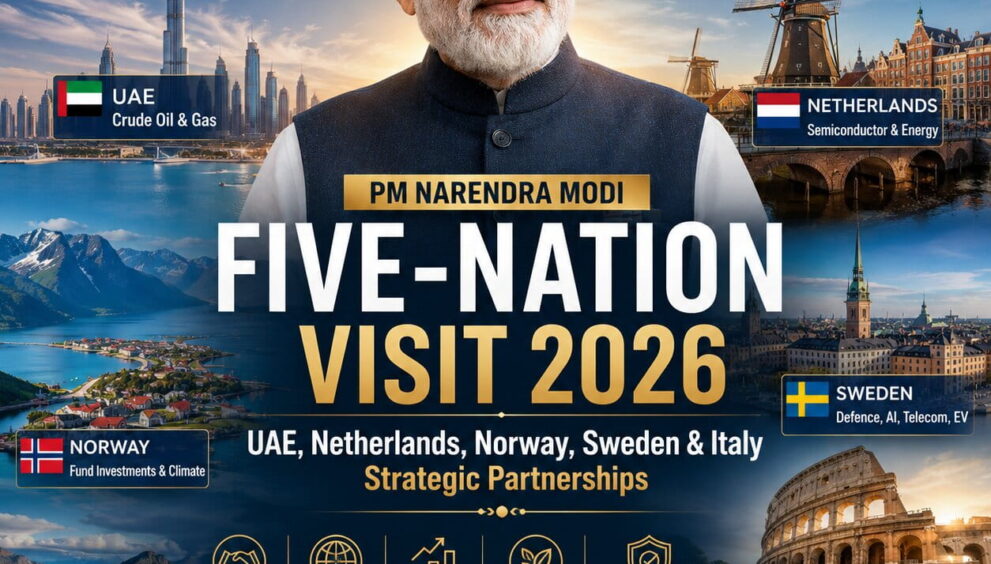
PM Narendra Modi’s Five-Nation Visit 2026: India Strengthens Global Ties With UAE, Netherlands, Norway, Sweden & Italy
By Hindustan Enews
Published on May 15, 2026
Official Website: Hindustan Enews
Breaking News: PM Narendra Modi Embarks on Strategic Five-Nation Tour
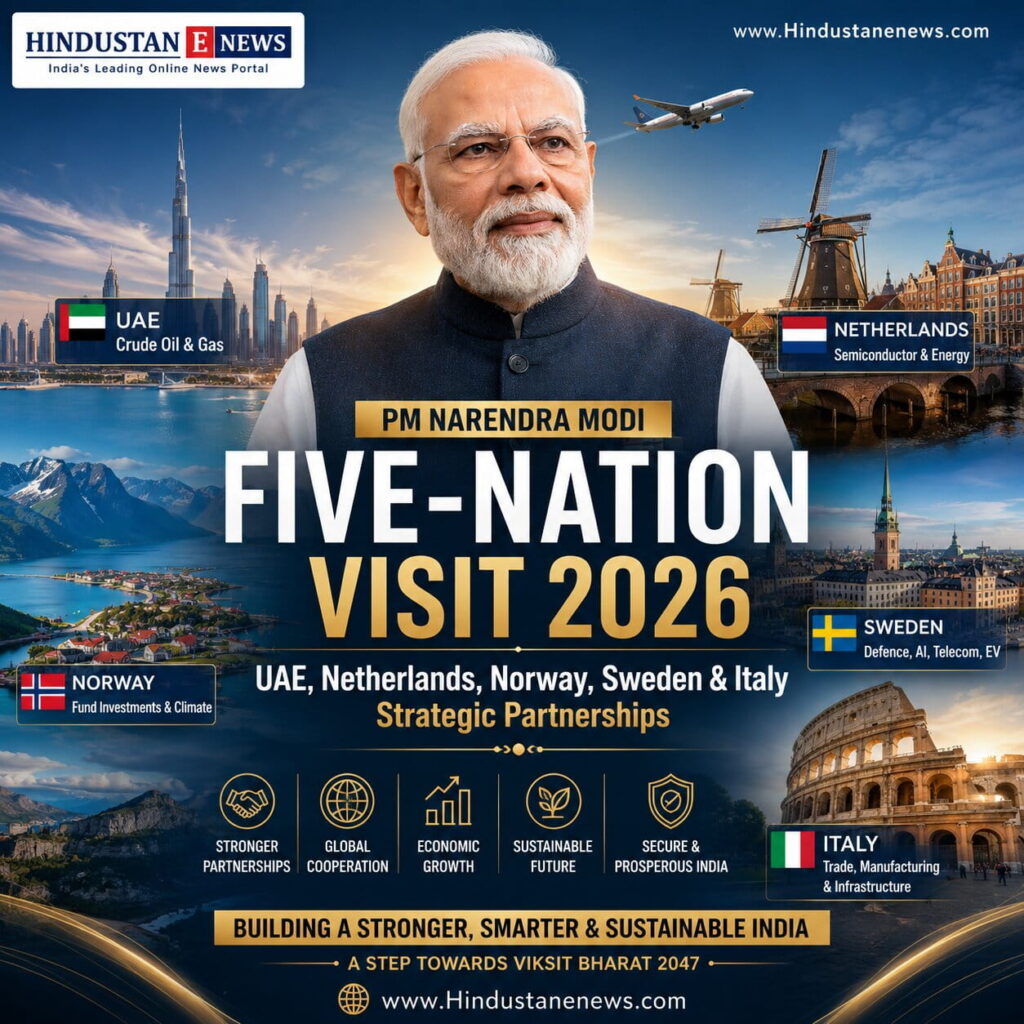
India has officially announced Prime Minister Narendra Modi’s high-level diplomatic visit to five important nations — the United Arab Emirates, Netherlands, Norway, Sweden, and Italy — from May 15 to May 20, 2026.
The visit is being viewed as one of India’s most strategically important diplomatic missions of 2026. The multi-nation tour is expected to strengthen India’s partnerships in critical sectors including crude oil, gas, semiconductors, defence technology, AI, climate cooperation, telecom, EV manufacturing, and sovereign fund investments.
The visit comes at a time when India is rapidly emerging as a global economic powerhouse and positioning itself as a major manufacturing, innovation, and geopolitical hub.
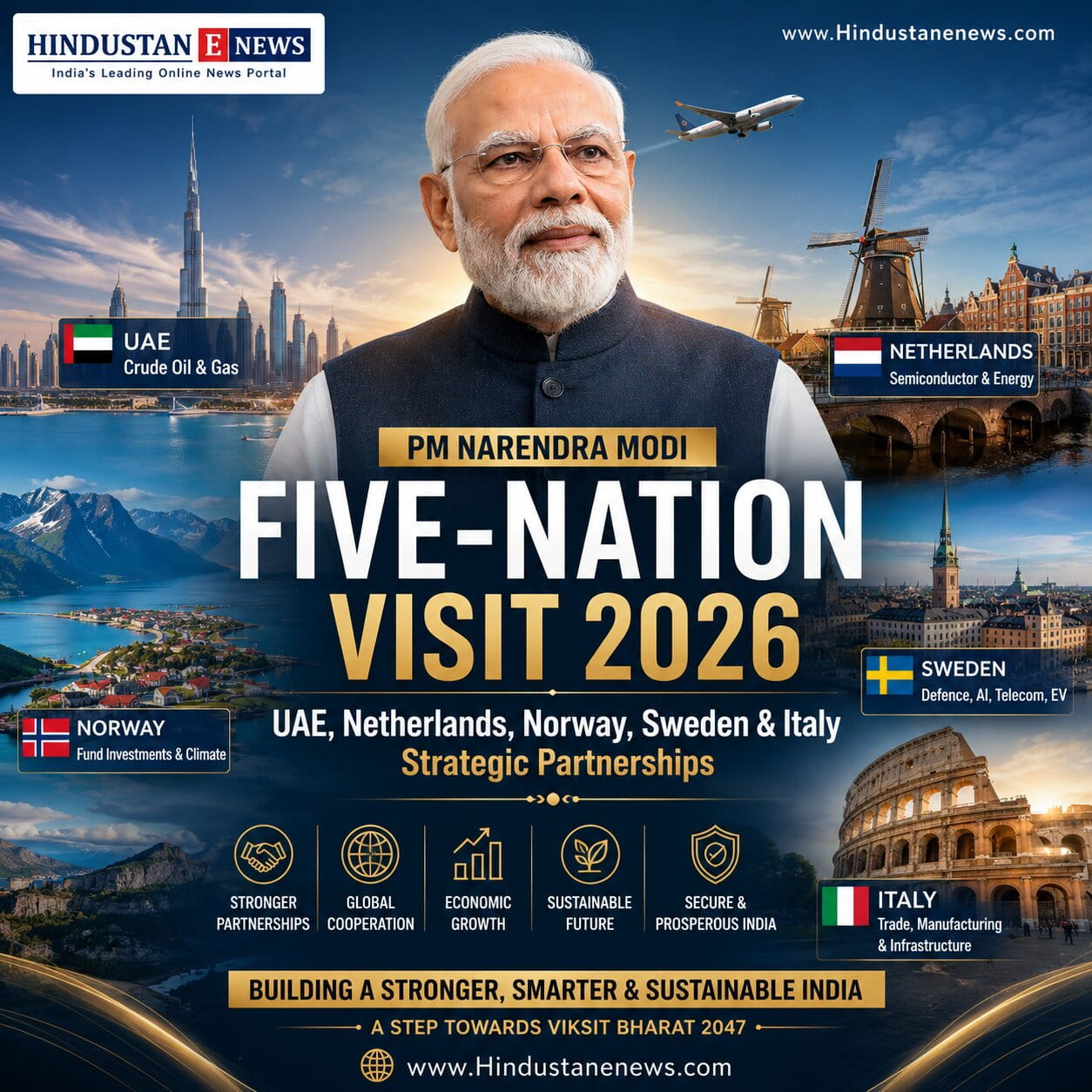
PM Modi Five-Nation Visit 2026 Highlights
| Country | Key Focus Areas | Strategic Importance |
|---|---|---|
| UAE | Crude Oil, Gas, Energy Security | India’s major energy partner |
| Netherlands | Semiconductors, Clean Energy | Chip manufacturing collaboration |
| Norway | Sovereign Fund Investments, Climate | Green economy partnerships |
| Sweden | Defence, AI, Telecom, EV | Advanced technology cooperation |
| Italy | Manufacturing, Trade, Infrastructure | Europe-India industrial partnership |
Why PM Modi’s 2026 Foreign Visit Matters for India
India’s global diplomacy has undergone a major transformation over the past decade. Under PM Modi’s leadership, India has prioritized:
- Energy security
- Semiconductor independence
- Defence modernization
- Foreign direct investment
- Artificial intelligence partnerships
- Climate resilience
- Electric vehicle ecosystem growth
- Global trade expansion
This five-nation tour directly aligns with India’s long-term economic and strategic goals under initiatives such as:
- Make in India
- Digital India
- Atmanirbhar Bharat
- National Semiconductor Mission
- Green Hydrogen Mission
- Viksit Bharat 2047
UAE Visit: India Focuses on Crude Oil & Gas Security
India-UAE Relations Reach New Heights
The first leg of PM Modi’s foreign visit begins with the United Arab Emirates, one of India’s closest strategic and economic partners in the Middle East.
The UAE remains one of India’s largest suppliers of crude oil and natural gas. Energy security continues to be critical for India as the country remains among the world’s fastest-growing major economies.
Key Agenda During UAE Visit
1. Crude Oil Supply Agreements
India is expected to negotiate long-term crude oil contracts to ensure stable energy imports.
2. LNG and Gas Cooperation
India aims to expand LNG infrastructure partnerships and diversify energy sourcing.
3. Investment Expansion
UAE sovereign wealth funds may announce fresh investments into:
- Indian infrastructure
- Renewable energy
- Logistics
- Smart cities
- Ports
4. Bilateral Trade Growth
India and UAE are likely to strengthen trade relations under the Comprehensive Economic Partnership Agreement (CEPA).
UAE’s Importance for India
| Sector | Importance |
|---|---|
| Oil Imports | Major energy supplier |
| Indian Diaspora | Over 3 million Indians |
| Trade | One of India’s largest trade partners |
| Investment | Massive sovereign fund investments |
For more information on India-UAE trade partnerships, visit:
Ministry of External Affairs India
Netherlands Visit: Semiconductor & Energy Collaboration
India Targets Semiconductor Leadership
The second stop of PM Modi’s visit is the Netherlands, a global leader in semiconductor technology and advanced energy systems.
This visit is expected to significantly boost India’s semiconductor ambitions.
Why Netherlands Matters to India
The Netherlands is home to world-leading semiconductor ecosystems and advanced technology firms.
India is aggressively working to reduce dependence on imported semiconductor chips while becoming a global electronics manufacturing hub.
Key Discussion Areas
Semiconductor Manufacturing
India may seek:
- Semiconductor fabrication collaboration
- Chip design partnerships
- Technology transfer agreements
- Research and innovation investments
Green Energy Cooperation
Expected discussions include:
- Offshore wind energy
- Hydrogen technology
- Sustainable infrastructure
- Climate-friendly industrial systems
Supply Chain Diversification
India wants to become a reliable global supply chain alternative.
India’s Semiconductor Vision
India’s semiconductor mission aims to:
- Build domestic chip manufacturing
- Reduce imports
- Support AI and EV industries
- Strengthen national security technology
Learn more about semiconductor initiatives:
India Semiconductor Mission
Norway Visit: Climate Partnerships & Sovereign Fund Investments
India-Norway Green Partnership Expands
PM Modi’s visit to Norway is expected to focus heavily on:
- Green investments
- Climate finance
- Renewable energy
- Sustainable infrastructure
Norway possesses one of the world’s largest sovereign wealth funds, making it a crucial investment partner.
Key Focus Areas
1. Sovereign Fund Investments
Norwegian investment institutions are expected to explore opportunities in:
- Indian infrastructure
- Renewable energy
- Urban development
- Transportation
2. Climate Cooperation
India and Norway may deepen collaboration on:
- Carbon reduction
- Green shipping
- Clean energy
- Ocean sustainability
3. Arctic and Maritime Cooperation
Discussions may include maritime technology and shipping innovation.
Why Norway is Important
| Area | Strategic Value |
|---|---|
| Sovereign Wealth Fund | Major investment source |
| Renewable Energy | Green technology leader |
| Climate Cooperation | Global sustainability influence |
Global climate initiatives reference:
United Nations Climate Action
Sweden Visit: Defence, AI, Telecom & EV Cooperation
Sweden Emerges as Key Technology Partner
The visit to Sweden is expected to be one of the most important segments of PM Modi’s diplomatic tour.
Sweden is globally recognized for:
- Defence innovation
- Artificial intelligence
- Telecom infrastructure
- Electric vehicle technology
Major Discussion Areas
Defence Technology
India aims to strengthen defence manufacturing collaboration under the Make in India initiative.
Potential discussions may involve:
- Defence systems
- Aerospace technology
- Cybersecurity
- Indigenous manufacturing
Artificial Intelligence (AI)
India is accelerating AI adoption across:
- Governance
- Healthcare
- Defence
- Education
- Finance
Sweden’s AI expertise can support India’s digital transformation goals.
Telecom Partnerships
India and Sweden may deepen telecom cooperation involving:
- 5G infrastructure
- Digital connectivity
- Network security
Electric Vehicle Ecosystem
Expected EV-related discussions include:
- Battery technology
- Sustainable mobility
- EV manufacturing
- Green transportation
Sweden’s Strategic Role
| Sector | Importance for India |
|---|---|
| AI | Emerging digital economy |
| Defence | Indigenous defence production |
| Telecom | Digital India expansion |
| EV | Sustainable transportation |
AI and technology policy insights:
NITI Aayog India
Italy Visit: Manufacturing, Infrastructure & Trade Expansion
India-Italy Economic Cooperation Set to Grow
The final destination of PM Modi’s foreign tour is Italy, one of Europe’s major industrial economies.
India and Italy are expected to discuss:
- Industrial manufacturing
- Infrastructure development
- Trade partnerships
- Technology exchange
Key Focus Areas
Manufacturing Partnerships
India seeks greater European industrial collaboration under Make in India.
Infrastructure Investments
Potential cooperation areas:
- Smart infrastructure
- Transportation systems
- Engineering projects
- Urban modernization
MSME and Industrial Cooperation
Both countries may expand partnerships between small and medium enterprises.
India’s Global Diplomacy Strategy in 2026
PM Modi’s five-nation tour demonstrates India’s evolving global priorities.
Core Strategic Objectives
Energy Security
Securing reliable oil and gas supplies remains crucial.
Technology Independence
India is accelerating semiconductor and AI capabilities.
Climate Leadership
India is positioning itself as a major green economy.
Defence Manufacturing
India aims to become a global defence manufacturing hub.
Investment Attraction
Foreign investments are critical for infrastructure and industrial growth.
Economic Impact of PM Modi’s Foreign Tour
Experts believe this diplomatic mission could result in:
- Multi-billion-dollar investment announcements
- Semiconductor manufacturing deals
- Defence technology partnerships
- Renewable energy collaborations
- Expansion of bilateral trade
- Increased foreign direct investment (FDI)
How This Visit Benefits India
Major Expected Outcomes
| Area | Expected Benefit |
|---|---|
| Energy | Stable oil & gas supplies |
| Technology | Semiconductor and AI growth |
| Defence | Indigenous manufacturing support |
| Economy | Increased FDI inflows |
| Climate | Green energy cooperation |
| Employment | Job creation in emerging sectors |
Global Reactions to India’s Rising Influence
India’s expanding diplomatic reach highlights its growing geopolitical importance.
International analysts increasingly view India as:
- A global manufacturing hub
- A digital economy leader
- A reliable geopolitical partner
- A climate cooperation leader
- A fast-growing consumer market
PM Modi’s Foreign Policy Vision
Over the past decade, PM Modi’s foreign policy has focused on:
- Strategic autonomy
- Economic diplomacy
- Technology partnerships
- Security cooperation
- Global south leadership
This five-nation visit reflects India’s ambition to become a leading global power by 2047.
Read More About in this:-
- PM Modi five nation visit 2026
- Narendra Modi foreign visit May 2026
- India UAE relations 2026
- India Netherlands semiconductor partnership
- India Norway climate cooperation
- India Sweden defence AI telecom EV
- India Italy trade partnership
- Modi international visit latest news
Official Website:
Hindustan Enews Latest News
Recommended Do-Follow References
| Source | Purpose |
|---|---|
| Ministry of External Affairs India | Official diplomacy updates |
| NITI Aayog | AI & policy references |
| India Semiconductor Mission | Semiconductor ecosystem |
| United Nations Climate Action | Climate cooperation |
| Invest India | Investment ecosystem |
FAQs & People Also Ask (PAA) for PM Modi Five-Nation Visit 2026
1: Why is PM Narendra Modi visiting five countries in May 2026?
Prime Minister Narendra Modi is visiting the UAE, Netherlands, Norway, Sweden, and Italy to strengthen India’s strategic partnerships in energy, semiconductors, AI, defence, telecom, EV manufacturing, climate cooperation, trade, and foreign investments. The visit is expected to improve India’s global economic and geopolitical influence.
2: Which countries are included in PM Modi’s 2026 five-nation visit?
The five countries included in PM Modi’s diplomatic visit are:
- United Arab Emirates
- Netherlands
- Norway
- Sweden
- Italy
3: What is the main purpose of PM Modi’s UAE visit?
The UAE visit focuses mainly on crude oil, gas supply, energy security, infrastructure investment, and trade expansion between India and the UAE. India is seeking long-term energy partnerships and increased sovereign investments.
4: Why is the Netherlands important for India in 2026?
The Netherlands is strategically important because of its leadership in semiconductor technology, energy innovation, and advanced manufacturing. India aims to strengthen semiconductor partnerships to support its electronics and AI ecosystem.
5: What discussions are expected during PM Modi’s Norway visit?
PM Modi’s Norway visit is expected to focus on sovereign wealth fund investments, renewable energy, climate cooperation, maritime partnerships, and sustainable development projects.
6: Why is Sweden a key partner for India?
Sweden is globally recognized for defence innovation, AI development, telecom infrastructure, EV technology, and sustainable industrial systems. India seeks collaboration in advanced technology and defence manufacturing.
7: What is the importance of Italy in PM Modi’s foreign tour?
Italy is an important European industrial economy. India and Italy are expected to expand cooperation in infrastructure, manufacturing, MSME partnerships, engineering, and trade investments.
8: How will this five-nation visit benefit India’s economy?
The visit may bring:
- Increased foreign direct investment (FDI)
- New semiconductor projects
- Defence technology collaborations
- Energy security agreements
- Job creation
- Trade expansion
- AI and telecom partnerships
9: What sectors are the top focus areas during PM Modi’s 2026 international visit?
The major sectors include:
- Crude oil & gas
- Semiconductors
- Defence
- Artificial Intelligence
- Telecom
- Electric vehicles
- Renewable energy
- Climate cooperation
- Infrastructure investments
10: How does this visit support India’s semiconductor mission?
India is aggressively expanding domestic semiconductor manufacturing. Partnerships with the Netherlands and European technology ecosystems can help India reduce import dependency and become a global electronics manufacturing hub.
11: What are the expected outcomes of PM Modi’s five-nation tour 2026?
The expected outcomes include strategic trade agreements, energy partnerships, defence collaborations, semiconductor investments, climate cooperation, AI development partnerships, and stronger diplomatic relations between India and Europe/Middle East nations.
The visit is also expected to improve India’s global image as:
- A reliable economic partner
- A manufacturing hub
- A digital economy leader
- A strategic geopolitical force
Several analysts believe the visit may result in multi-billion-dollar investment announcements across infrastructure, energy, EV manufacturing, telecom, and advanced technology sectors.
12: Why is India strengthening ties with European countries in 2026?
India is deepening partnerships with European nations to:
- Diversify supply chains
- Access advanced technologies
- Strengthen defence capabilities
- Improve clean energy cooperation
- Expand exports and trade
Europe remains one of India’s largest trade and investment partners. Countries like Sweden, Netherlands, Norway, and Italy provide technological expertise and investment opportunities essential for India’s long-term growth strategy.
The partnerships also align with India’s vision of becoming a developed economy under the Viksit Bharat 2047 initiative.
13: How important is the UAE for India’s energy security?
The United Arab Emirates is one of India’s most critical energy partners. India imports a large share of crude oil and LNG from Gulf nations, making energy cooperation vital for economic stability.
The UAE also plays a major role in:
- Strategic petroleum reserves
- Infrastructure investments
- Logistics and ports
- Renewable energy partnerships
- Bilateral trade growth
Additionally, millions of Indians live and work in the UAE, making the relationship economically and socially significant.
14: What role will AI and telecom cooperation play during PM Modi’s Sweden visit?
Sweden is expected to become a major technology partner for India in:
- Artificial Intelligence
- Telecom infrastructure
- 5G and next-generation connectivity
- Cybersecurity
- Digital transformation
India’s growing digital economy requires advanced telecom systems and AI innovation. Collaboration with Swedish firms can help India improve:
- Smart cities
- Healthcare AI
- Defence AI
- Financial technology
- Education technology
The partnership may also support India’s ambition to become a global AI hub.
15: Why are sovereign wealth fund investments from Norway important for India?
Norway manages one of the world’s largest sovereign wealth funds, making it a major global investor. India is seeking long-term infrastructure and sustainability investments from Norway to support:
- Renewable energy projects
- Smart transportation
- Urban development
- Climate infrastructure
- Green manufacturing
These investments can accelerate India’s transition toward sustainable economic growth while generating employment and boosting industrial expansion.
Norwegian investment partnerships are also expected to strengthen India’s climate leadership position globally.
16: How does PM Modi’s foreign policy impact India’s global position?
Prime Minister Narendra Modi has significantly transformed India’s foreign policy by focusing on strategic autonomy, economic diplomacy, technology partnerships, defence cooperation, and global leadership.
India today is viewed as:
- A fast-growing economy
- A reliable global partner
- A manufacturing alternative to China
- A major digital innovation hub
- A key voice for developing nations
PM Modi’s diplomatic outreach has helped India strengthen ties with major global powers while balancing geopolitical interests across Asia, Europe, the Middle East, and the United States.
This five-nation tour reinforces India’s ambition to become a top global power by 2047.
17: How can India benefit from semiconductor partnerships with the Netherlands?
The semiconductor industry is crucial for:
- Smartphones
- AI systems
- Electric vehicles
- Defence equipment
- Data centers
- Telecom infrastructure
India currently imports a large share of semiconductor chips, making domestic manufacturing strategically important.
Partnerships with the Netherlands can help India:
- Develop fabrication facilities
- Improve chip design capabilities
- Attract global electronics companies
- Strengthen supply chain resilience
- Build high-tech manufacturing jobs
Semiconductor cooperation is expected to become one of the most important outcomes of PM Modi’s 2026 foreign visit.
18: Why is climate cooperation becoming central to India’s foreign relations?
Climate change, renewable energy, and sustainability are now major global priorities. India is rapidly expanding its renewable energy capacity and positioning itself as a global leader in green growth.
Partnerships with Norway and Sweden can help India:
- Expand green hydrogen projects
- Improve renewable energy infrastructure
- Develop clean transportation systems
- Reduce carbon emissions
- Advance climate technology innovation
India’s climate diplomacy also enhances its global reputation as a responsible economic power committed to sustainable development.
19: What industries could see major investment after PM Modi’s five-nation visit?
Several sectors are expected to attract foreign investments following the diplomatic tour, including:
- Semiconductor manufacturing
- Artificial Intelligence
- Electric vehicles
- Renewable energy
- Defence manufacturing
- Telecom infrastructure
- Smart cities
- Logistics
- Infrastructure development
- Green technology
Experts believe India’s economic reforms, growing consumer market, and manufacturing incentives make the country highly attractive for global investors.
This visit could accelerate India’s emergence as a global investment destination.
20: Why is PM Modi’s 2026 five-nation visit considered historically important?
PM Modi’s 2026 five-nation visit is considered historically important because it reflects India’s transition from a developing economy into a major global strategic power.
The visit focuses on critical future industries such as:
- AI
- Semiconductors
- Defence technology
- Renewable energy
- EV manufacturing
- Telecom
- Climate partnerships
Unlike traditional diplomatic tours centered mainly on political relations, this mission is heavily focused on economic transformation, technology leadership, energy security, and long-term geopolitical positioning.
The tour also signals India’s growing importance in global supply chains, international investments, and digital innovation ecosystems. Analysts believe these partnerships could shape India’s economic growth trajectory for decades and strengthen its role as one of the world’s most influential nations.
Conclusion
Prime Minister Narendra Modi’s five-nation diplomatic visit marks a major step in India’s evolving global strategy. From energy security in the UAE to semiconductor cooperation with the Netherlands, climate investments from Norway, AI and defence collaboration with Sweden, and industrial partnerships with Italy, the visit reflects India’s ambition to become a leading economic and geopolitical power.
As India accelerates toward becoming a developed nation under the Viksit Bharat vision, these strategic international partnerships will play a crucial role in shaping the country’s economic future, technology leadership, and global influence.
For the latest political, international, business, and technology updates, visit:
Hindustan Enews