




















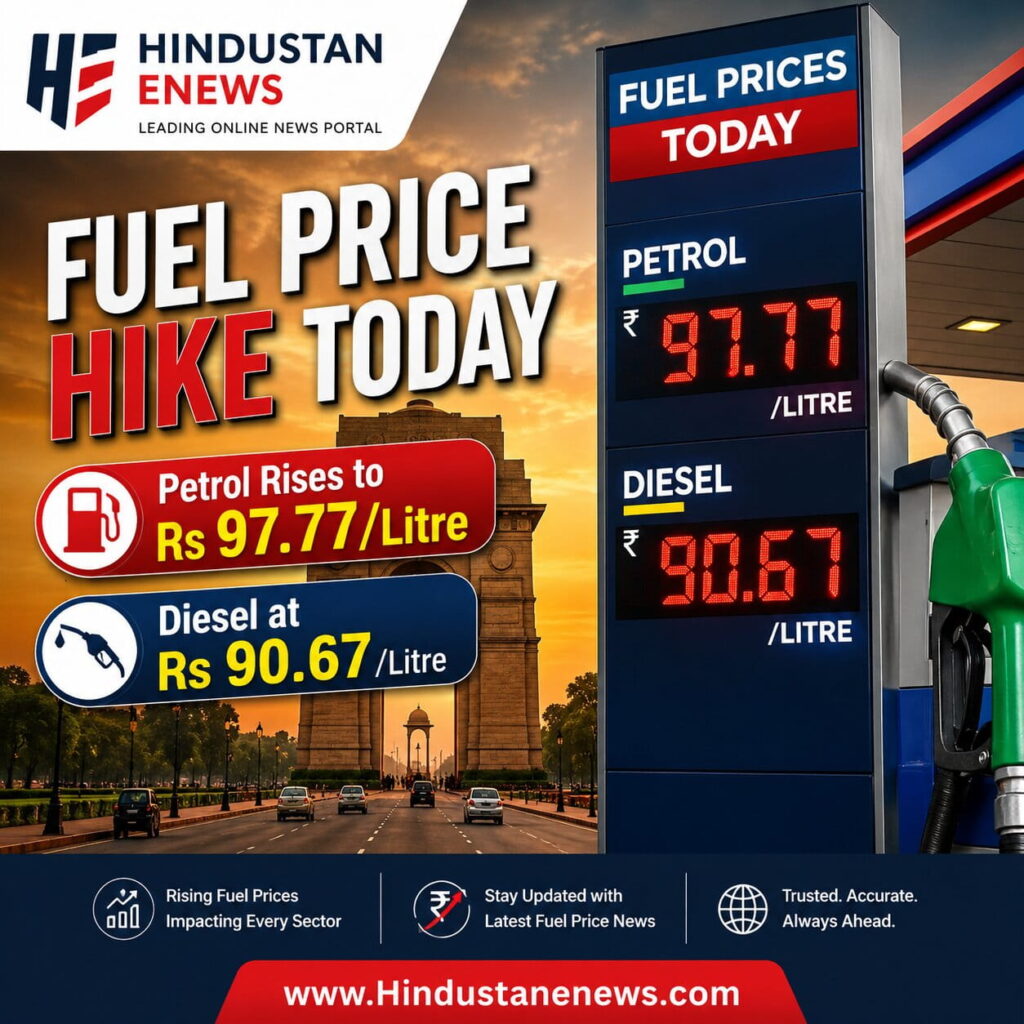



















































Fuel Price Hike Today: Petrol Rises to Rs 97.77/Litre, Diesel at Rs 90.67 | Hindustan Enews

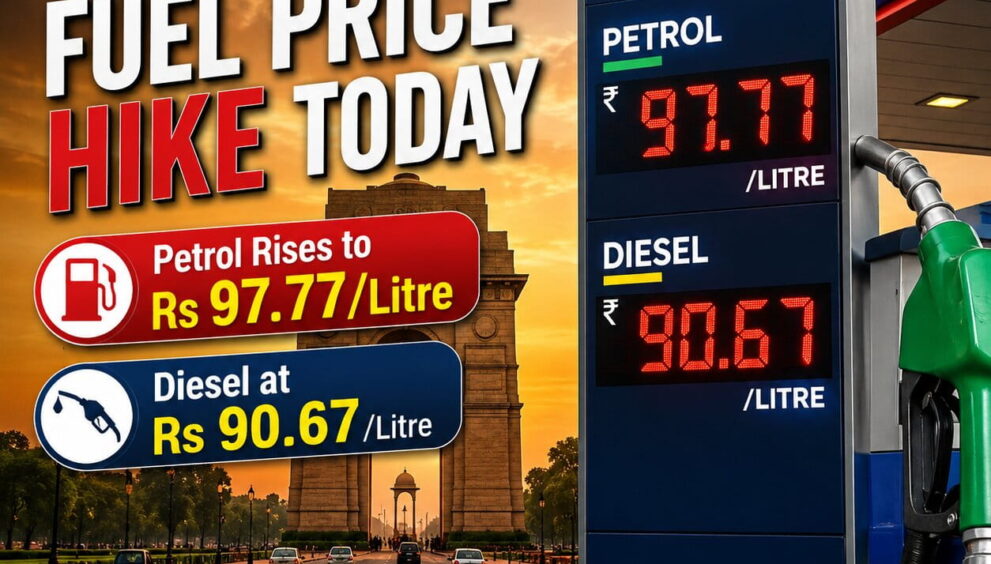
Hike in Fuel Prices: Petrol Prices Rise from Rs 94.77 to Rs 97.77 Per Litre, Diesel Prices Increase from Rs 87.67 to Rs 90.67 Per Litre
Read complete fuel price hike analysis, city-wise rates, economic impact, inflation effect, FAQs, and latest updates on Hindustan Enews. Petrol prices rise from Rs 94.77 to Rs 97.77 per litre while diesel increases from Rs 87.67 to Rs 90.67 in India.
Published by: Hindustan Enews
Category: India News / Economy / Fuel Price Update
Fuel Price Hike Shocks Consumers Across India
The latest fuel price revision has once again increased the financial burden on common citizens and businesses across India. Petrol prices have increased from Rs 94.77 per litre to Rs 97.77 per litre, while diesel prices have risen from Rs 87.67 per litre to Rs 90.67 per litre. This sharp increase in fuel prices is expected to impact transportation costs, daily commuting, logistics, agriculture, and essential commodities nationwide.
The sudden hike has triggered widespread discussions among economists, transport associations, and consumers. With inflation already affecting household budgets, the increase in petrol and diesel rates may further push up the prices of essential goods and services.
As fuel remains one of the most crucial economic drivers in India, any rise in petrol and diesel prices directly affects millions of people. According to industry analysts, global crude oil volatility, currency fluctuations, and increased taxation are among the key reasons behind the latest revision.
For the latest national economic updates and breaking news, visit Hindustan Enews Official Website.
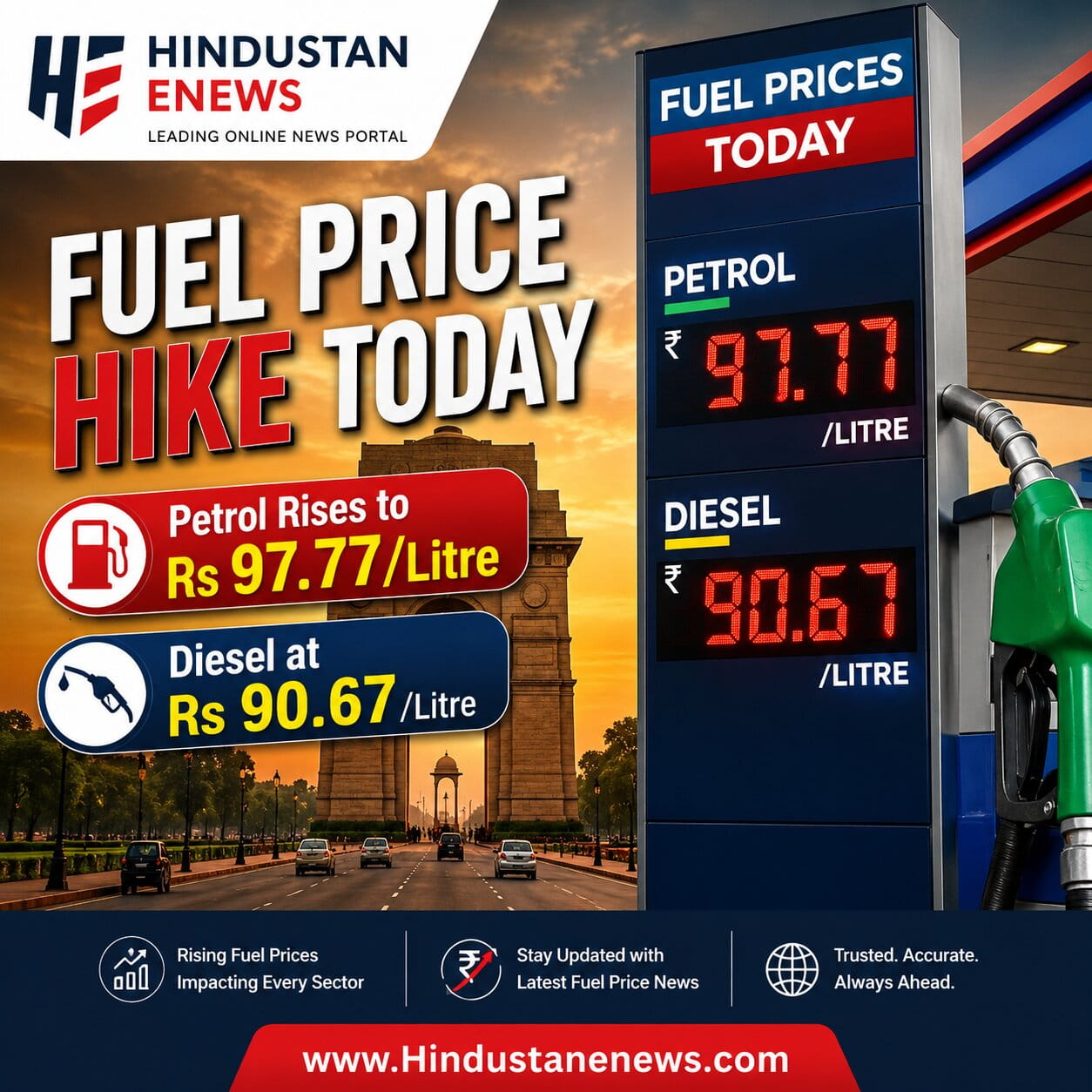
Latest Petrol and Diesel Prices in India
| Fuel Type | Previous Price | New Price | Increase |
|---|---|---|---|
| Petrol | Rs 94.77/Litre | Rs 97.77/Litre | Rs 3.00 |
| Diesel | Rs 87.67/Litre | Rs 90.67/Litre | Rs 3.00 |
The increase of Rs 3 per litre in both petrol and diesel is expected to have a significant impact on transportation and supply chain costs across India.
Why Have Petrol and Diesel Prices Increased?
Several major factors are contributing to the latest hike in fuel prices in India. Understanding these reasons helps consumers and businesses prepare for the economic impact.
1. Rise in Global Crude Oil Prices
India imports a large percentage of its crude oil requirements. Any increase in international crude oil prices directly impacts domestic fuel rates. Recent geopolitical tensions and supply disruptions have increased global oil prices substantially.
For global crude oil market updates, readers can explore OPEC Official Website.
2. Rupee Depreciation Against the US Dollar
Since crude oil imports are paid in US dollars, the weakening of the Indian Rupee makes fuel imports more expensive. A weaker rupee increases the overall cost of refining and distribution.
Financial market insights are available at Reserve Bank of India.
3. Increase in Transportation and Refining Costs
Higher transportation costs, refining charges, and distribution expenses also contribute to fuel price hikes. Oil companies often adjust retail prices based on operational costs and international market conditions.
4. Government Taxes and Excise Duties
Central and state taxes constitute a significant portion of petrol and diesel prices in India. Any increase in taxes immediately impacts retail fuel rates.
Official taxation and fuel policy information can be found on Ministry of Petroleum and Natural Gas.
Impact of Fuel Price Hike on Common People
The increase in petrol and diesel prices affects every sector of society. From household budgets to transportation businesses, the economic impact is widespread.
Increase in Daily Transportation Costs
People who rely on personal vehicles, taxis, buses, and auto-rickshaws will now spend more on daily commuting. Ride-sharing services may also revise fares upward.
Rising Prices of Essential Goods
Diesel is heavily used in transportation and logistics. As diesel prices increase, the cost of transporting fruits, vegetables, groceries, medicines, and essential goods also rises.
Pressure on Agriculture Sector
Farmers depend on diesel-powered irrigation pumps, tractors, and transport vehicles. Increased diesel prices raise agricultural operational costs, which may ultimately impact food prices.
Inflationary Impact on the Economy
Fuel prices are directly linked to inflation. A sharp rise in petrol and diesel rates often leads to increased manufacturing, transportation, and service sector costs.
Economic data and inflation reports are regularly updated at Ministry of Statistics and Programme Implementation.
Petrol and Diesel Prices in Major Indian Cities
| City | Petrol Price | Diesel Price |
|---|---|---|
| Delhi | Rs 97.77 | Rs 90.67 |
| Mumbai | Rs 103.12 | Rs 95.44 |
| Kolkata | Rs 99.85 | Rs 92.76 |
| Chennai | Rs 101.21 | Rs 93.34 |
| Bengaluru | Rs 102.44 | Rs 94.10 |
| Hyderabad | Rs 105.09 | Rs 97.80 |
Prices may vary slightly based on local taxes and dealer commissions.
How Fuel Price Hikes Affect Businesses
The latest fuel price increase is expected to affect several industries across India.
Transportation and Logistics
Truck operators and logistics companies will face higher fuel expenses, increasing freight charges nationwide.
Aviation Sector
Airlines may increase airfares due to rising aviation fuel costs, impacting domestic and international travel.
E-Commerce and Delivery Services
Food delivery platforms, courier services, and online shopping companies may revise delivery charges.
Manufacturing Industry
Factories dependent on transportation and diesel generators may face higher production costs.
Public Reaction to the Fuel Price Increase
Citizens across India have expressed concerns regarding the rising cost of living. Social media platforms have seen increasing discussions related to fuel inflation, transportation expenses, and household budget pressures.
Many commuters and small business owners are demanding relief measures and tax reductions to control inflationary pressure.
Government Response on Fuel Prices
Government officials have stated that fuel pricing depends on multiple international and domestic economic factors. Authorities are closely monitoring global crude oil prices and currency fluctuations.
Experts believe that temporary relief may be possible if international crude oil prices stabilize in the coming months.
Expert Analysis on Future Fuel Prices
Energy market experts suggest that fuel prices may remain volatile due to ongoing geopolitical uncertainties and global supply chain disruptions.
Several analysts predict:
- Continued fluctuations in crude oil prices
- Possible impact of global conflicts on energy markets
- Pressure on inflation if fuel prices continue rising
- Increased adoption of electric vehicles and alternative energy sources
Energy market research is available through International Energy Agency.
Tips to Save Fuel and Reduce Expenses
Consumers can adopt several strategies to reduce fuel consumption and manage expenses effectively.
Maintain Proper Tyre Pressure
Properly inflated tyres improve mileage and reduce fuel consumption.
Avoid Aggressive Driving
Sudden acceleration and excessive braking consume more fuel.
Use Public Transportation
Using buses, metros, and shared rides can significantly reduce transportation costs.
Regular Vehicle Maintenance
Well-maintained engines improve fuel efficiency and performance.
Switch Off Engine During Long Stops
Turning off the engine at traffic signals can save fuel over time.
Growth of Electric Vehicles Amid Rising Fuel Prices
The latest hike in petrol and diesel prices may accelerate the adoption of electric vehicles (EVs) in India. Many consumers are now considering EVs as a long-term cost-saving solution.
The Indian government is also promoting EV adoption through subsidies and infrastructure development.
Electric mobility updates are available on NITI Aayog.
Comparison of Fuel Prices Over Recent Years
| Year | Average Petrol Price | Average Diesel Price |
|---|---|---|
| 2022 | Rs 88-95 | Rs 79-86 |
| 2023 | Rs 92-98 | Rs 84-89 |
| 2024 | Rs 94-100 | Rs 86-91 |
| 2025 | Rs 95-102 | Rs 87-93 |
| 2026 | Rs 97.77 | Rs 90.67 |
The steady increase in fuel prices reflects ongoing global economic and energy market challenges.
Fuel Price Hike and Its Effect on Inflation
Fuel prices are directly connected to inflation because transportation impacts every sector of the economy. Higher diesel prices particularly affect supply chains and logistics operations.
Economists warn that prolonged fuel inflation can lead to:
- Increased food prices
- Higher travel expenses
- Expensive construction materials
- Rising operational costs for businesses
- Pressure on household savings
What Consumers Expect from the Government
Many citizens are demanding:
- Reduction in excise duty
- Fuel tax relief
- Subsidies for public transport
- Better fuel price regulation
- Faster adoption of alternative energy solutions
The coming weeks will be crucial in determining whether fuel prices stabilize or continue rising.
Conclusion
The latest increase in petrol and diesel prices has added fresh concerns for consumers, businesses, and industries across India. Petrol prices rising from Rs 94.77 to Rs 97.77 per litre and diesel prices increasing from Rs 87.67 to Rs 90.67 per litre will likely impact transportation, inflation, and daily expenses nationwide.
While international crude oil prices and economic conditions continue to influence fuel pricing, consumers are now looking toward government interventions, alternative transportation solutions, and fuel-efficient practices to manage rising costs.
For continuous updates on fuel prices, economy, politics, business, and breaking national news, follow Hindustan Enews.

Frequently Asked Questions (FAQs)
1. What are the latest petrol prices in India?
Petrol prices have increased from Rs 94.77 per litre to Rs 97.77 per litre.
2. What are the latest diesel prices in India?
Diesel prices have increased from Rs 87.67 per litre to Rs 90.67 per litre.
3. Why have fuel prices increased in India?
Fuel prices have risen due to higher global crude oil prices, rupee depreciation, refining costs, and taxes.
4. How do fuel prices affect inflation?
Higher fuel prices increase transportation and logistics costs, leading to higher prices of goods and services.
5. Which sectors are most affected by diesel price hikes?
Transportation, agriculture, logistics, manufacturing, and public transport sectors are heavily affected.
6. Will transportation fares increase after fuel price hikes?
Yes, taxi fares, bus fares, delivery charges, and freight costs may increase due to higher fuel expenses.
7. How can consumers save fuel amid rising prices?
Consumers can save fuel through regular vehicle maintenance, proper tyre pressure, and fuel-efficient driving habits.
8. Are electric vehicles becoming popular due to rising petrol prices?
Yes, many consumers are considering electric vehicles as a cost-effective alternative to petrol and diesel vehicles.
9. How often are petrol and diesel prices revised in India?
Fuel prices are generally revised daily based on international crude oil prices and currency exchange rates.
10. Can the government reduce fuel prices?
Yes, governments can reduce fuel prices by lowering excise duties and taxes on petrol and diesel.
fuel price hike, petrol price today, diesel price today, fuel rates india, petrol diesel increase, india fuel news, fuel inflation india, petrol price update, diesel rate hike, crude oil prices, hindustan enews